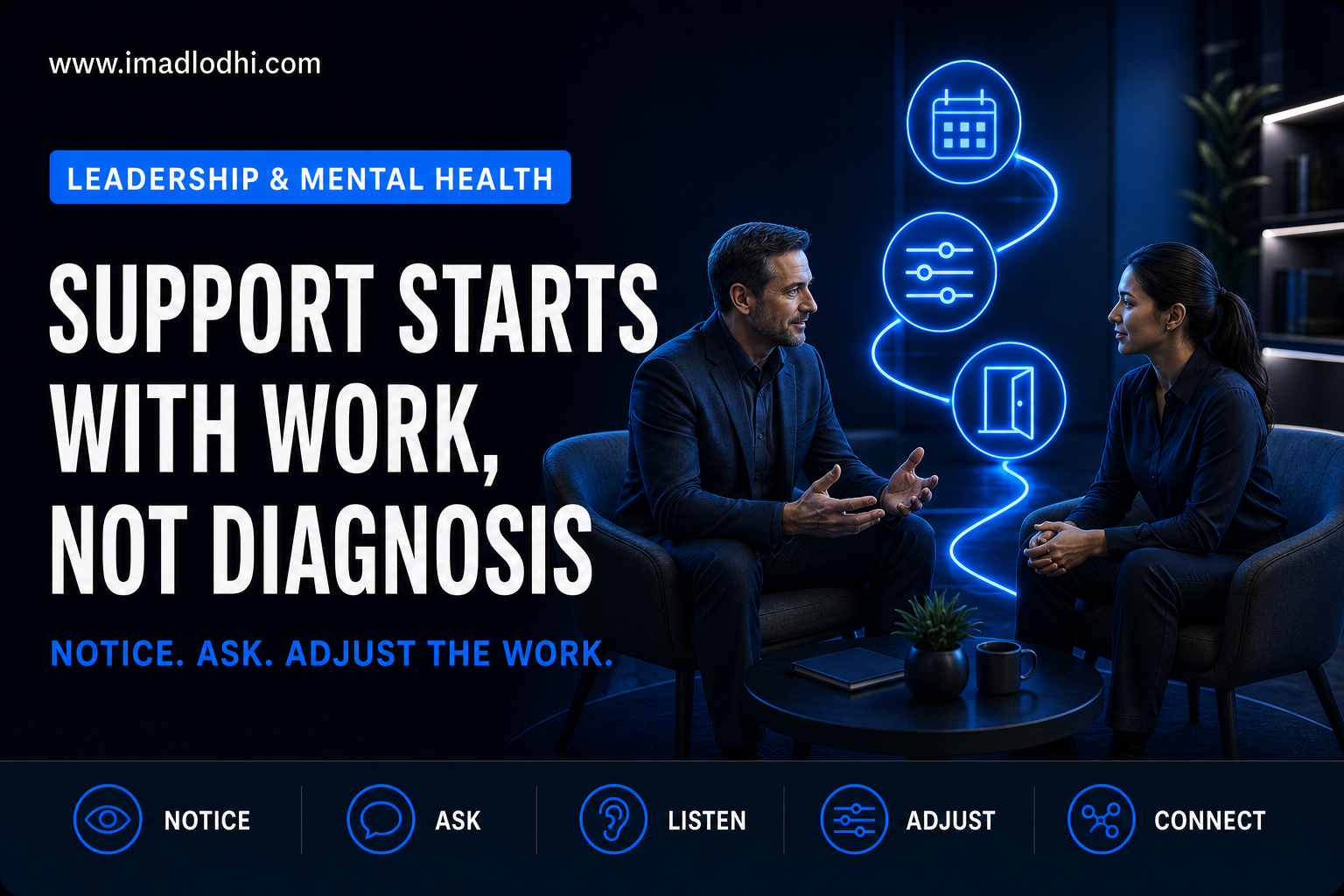
You notice the change before you know the reason.
A reliable team member misses two handoffs. They are quieter in meetings. A client email goes unanswered. The manager cares, closes the office door, and asks, “What is going on with you?”
The intention may be good. The question is not.
Here is the leadership tension: ignoring a visible change can leave someone unsupported, but trying to explain it can turn concern into diagnosis.
A caring manager should open a conversation. A caring manager should not become a clinician.
## Start With What You Can See
Consider this explicitly hypothetical IT-delivery example.
After several weeks of late-night releases, a delivery lead begins missing morning stand-ups and overlooking routine approvals. Their manager could speculate about motivation, commitment, or health. None of that is established by the facts.
What the manager actually knows is narrower: the work pattern changed, delivery is affected, and repeated late releases may be a workplace stressor worth examining.
That distinction protects dignity. It also produces a better conversation.
The World Health Organization recommends manager training that helps leaders recognize distress, respond appropriately, and understand job stressors. Its guidance is equally clear about the boundary: such training is not designed to turn managers into mental-health-care providers, and managers should not diagnose or treat mental disorders.
Canadian guidance also keeps the workplace in the frame. The Canadian Centre for Occupational Health and Safety advises organizations to equip managers to respond and to assess workplace factors rather than employees’ personal medical status. In Ontario accommodation guidance, the emphasis is generally on needs and functional limitations, with medical information limited to what is necessary for the accommodation process.
## Three Leadership Actions
**1. Describe; do not interpret.**
Say what you have observed: “I noticed two missed handoffs and that the release schedule has changed.” Avoid labels such as disengaged, unstable, or burned out. Behaviour is observable. Diagnosis is not.
**2. Ask about work and listen.**
Try: “How are things going, and is there anything about the work that we should discuss?” Give the person room to respond without pressing for private health details. If they raise a work-related need, listen for what is within your role to address.
**3. Adjust the system and connect the process.**
Review deadlines, staffing, after-hours expectations, role clarity, and available support. Explain the appropriate confidential route for accommodation or professional resources. Do not make yourself the employee’s counsellor—or their only support.
Individual support matters. An employee may choose to use clinical, community, or workplace resources. Organizational responsibility is different: leaders control workload, schedules, priorities, manager capability, and whether a safe, confidential process actually exists.
### Three Takeaways
- Notice changes without inventing their cause.
- Focus the conversation on work, support, and dignity.
- Train managers to connect people with help while fixing conditions the organization controls.
Care opens the door. Respect keeps the manager from crossing the threshold into diagnosis.
**When a team member’s work pattern changes, does your management practice create support—or speculation?**