After a difficult steering committee meeting, a project manager once said to me, “I let everyone down.”
He had missed an important question. The room had become tense, and he carried that moment out of the meeting as though it defined him.
Over coffee, I asked him four questions:
What happened?
What did you learn?
What will you do differently next time?
What support do you need from me?
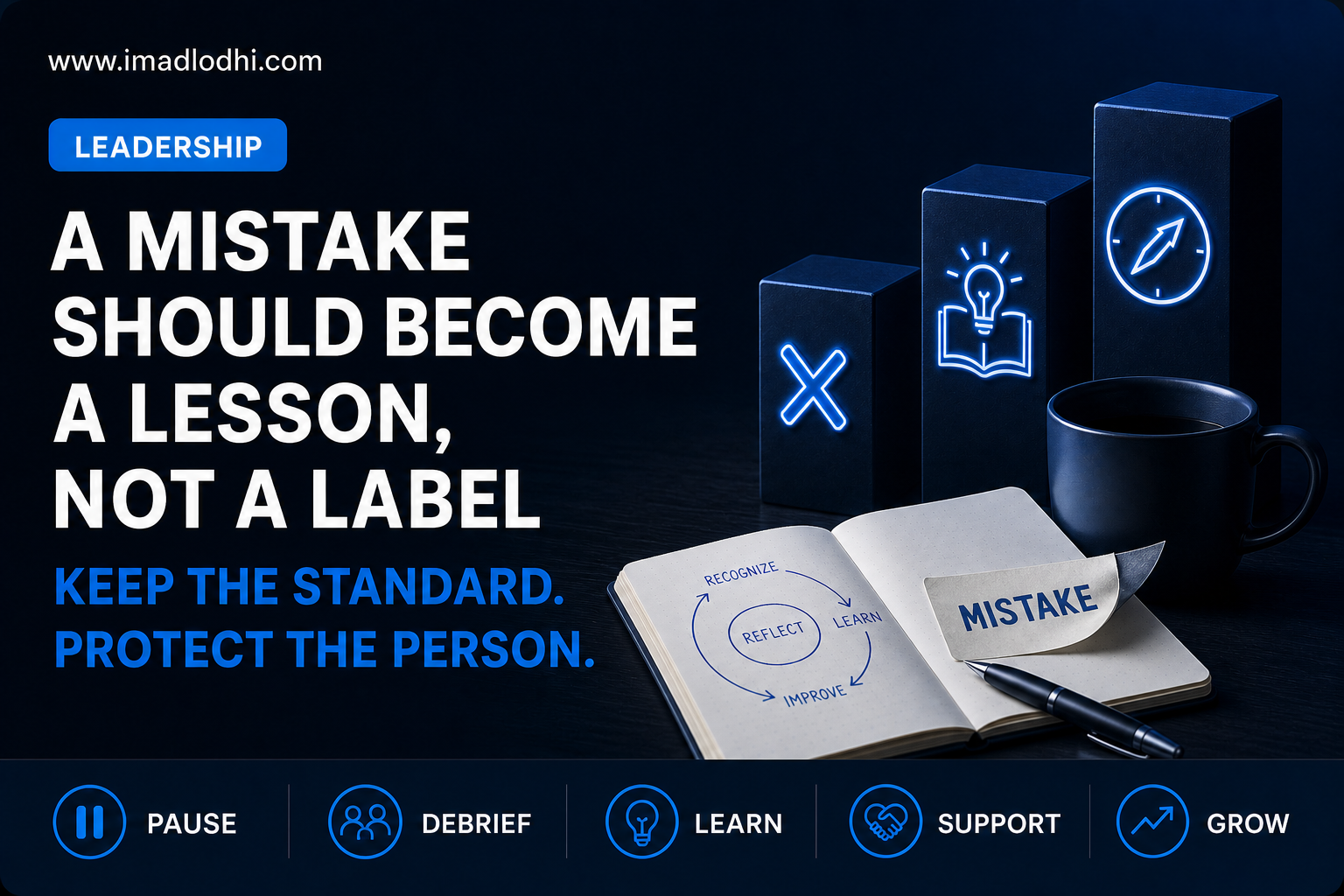
Accountability matters. But there is a difference between addressing a performance gap and making someone feel like they are the problem.
When people feel socially threatened, their attention shifts toward self-protection. Recall and flexible thinking can narrow precisely when learning matters most.
A calm, specific conversation helps the brain process the experience differently: not as a verdict, but as useful information for the next attempt.
I try to remember that every person carries dignity. Encouragement does not mean pretending a mistake did not matter. It means believing that one difficult moment does not have to become someone’s identity.
The practical takeaway is simple: after a setback, name one thing the person did well, identify one behaviour that must improve, and agree on the support and next step.
That is how leaders preserve both standards and hope.
How do you help someone learn from a mistake without allowing it to define them?
For more reflections on leadership, enablement, and helping people succeed, visit https://www.imadlodhi.com.
#Leadership #EmployeeEngagement #Mentoring #Resilience #Empathy #WorkplaceCulture #PeopleLeadership #EmployeeEnablement