I once spoke with a leader who was frustrated with a capable member of his IT delivery team.
“She cares,” he told me, “but lately, nothing seems to move without a reminder.”
That is an easy moment to diagnose as a motivation problem.
But when we looked closer, the employee was waiting days for access, navigating unclear handoffs, and rebuilding information scattered across several systems. She was not disengaged. She was exhausted from fighting the environment just to do her job.
This distinction matters.
Engagement is the willingness to contribute.
Enablement is having the clarity, tools, information, and support needed to contribute effectively.
We often ask people to bring more energy while ignoring the friction consuming the energy they already bring.
Human attention is limited. Every workaround, ambiguous process, and unnecessary approval occupies working memory. As cognitive load rises, people have less capacity for sound judgment, creativity, and persistence.
Over time, even committed employees may begin to withdraw.
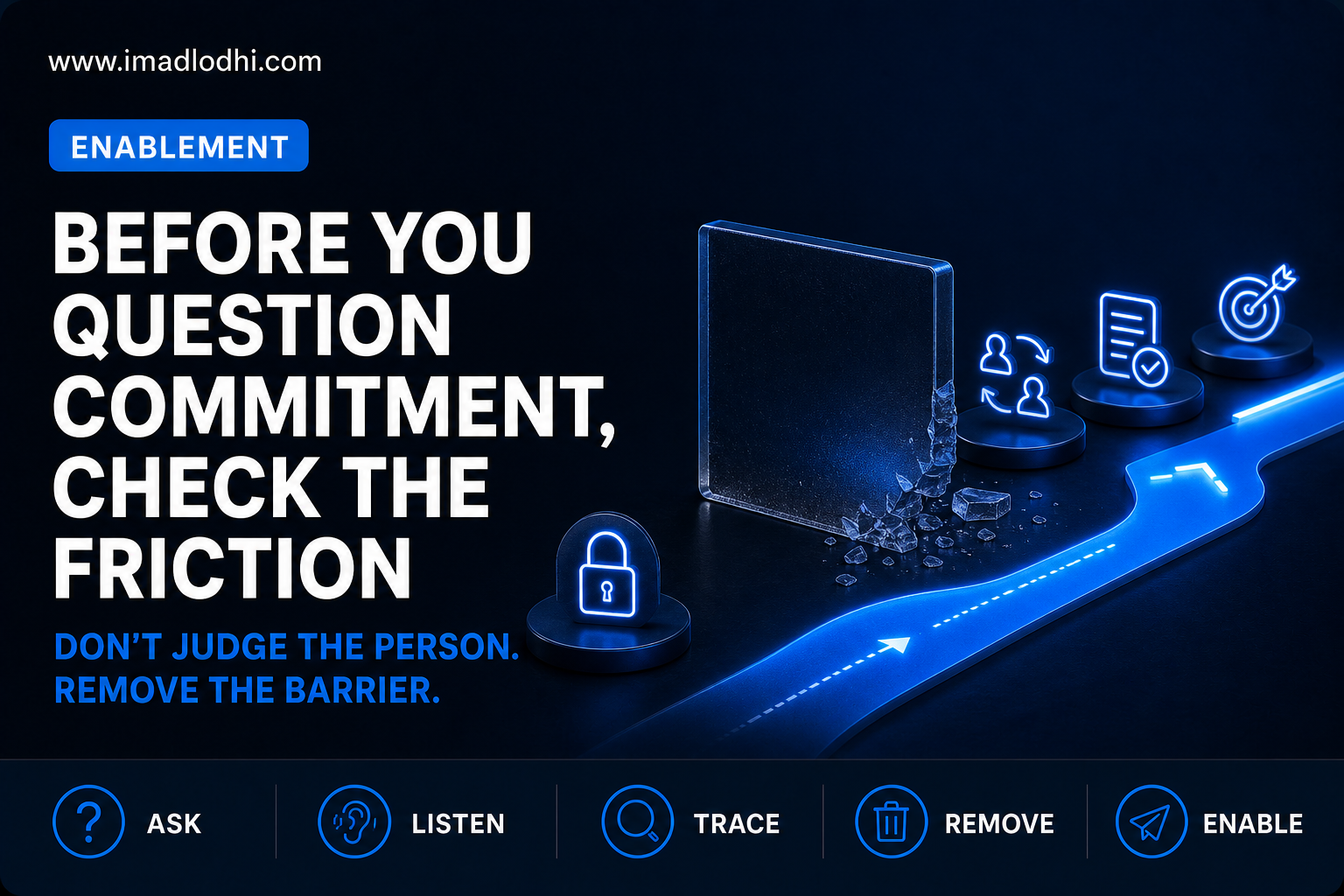
Empathetic leadership does not mean lowering expectations. It means understanding what stands between a person and the expectation before questioning their commitment.
A practical question for your next one-on-one is:
“What makes succeeding here harder than it should be?”
Then listen without defending the process.
Choose one recurring obstacle. Remove it, simplify it, or clarify who owns the next handoff.
Sometimes encouragement is a kind word.
Sometimes it is clearing the path so someone can use the gifts God gave them.
What friction might your team be quietly carrying that you have mistaken for disengagement?
For more reflections on leadership, enablement, and helping others succeed, visit https://www.imadlodhi.com.
#Leadership #EmployeeEngagement #EmployeeEnablement #Empathy #WorkplaceCulture #ITLeadership #OrganizationalEffectiveness #HumanConnection