A delivery leader once told me about a meeting that changed how he saw his role.
The plan was slipping. A critical dependency had failed, the deadline was close, and everyone knew the next conversation would be difficult.
He entered the room quickly, spoke even faster, and began listing every risk.
Within minutes, the team matched his energy. One person became defensive. Another stopped offering ideas. The room filled with activity, but very little useful thinking.
Then he noticed what was happening.
He paused and said, “Let’s slow this down. What do we know? What are we assuming? And what is the next useful step?”
The problem did not disappear. But the room came back online.
That is an important part of leadership we do not discuss enough: your presence becomes part of the team’s operating environment.
Under pressure, people look to the leader for cues about how much threat they are facing. When panic and ambiguity rise together, the brain shifts attention toward protection. Working memory and flexible thinking can narrow just when the team needs them most.
A calm tone, specific language, and one clear next step help restore enough certainty for people to think again.
Calm is not pretending everything will work out. It is grounded hope. It is the discipline of facing reality without allowing fear to run the meeting.
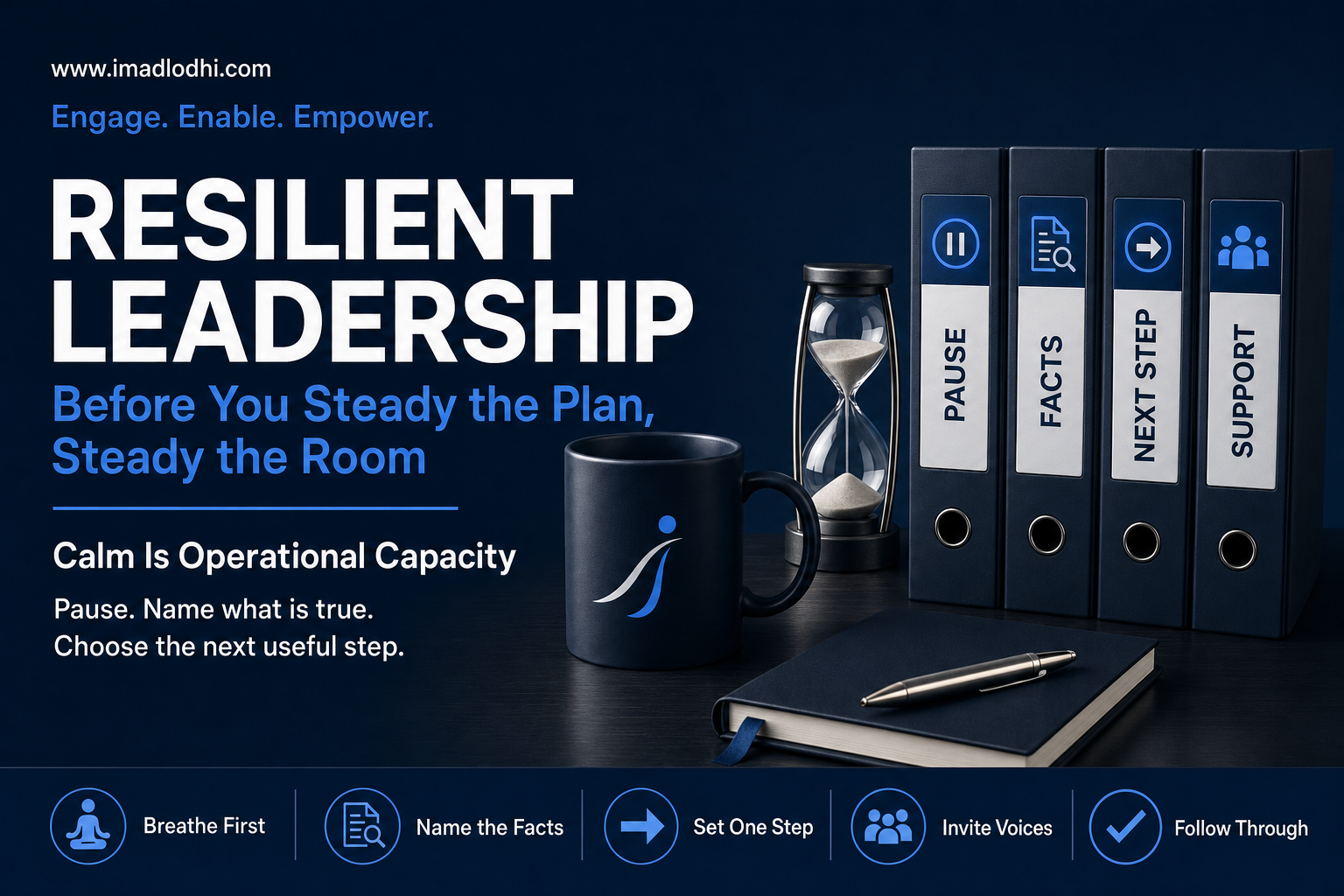
When pressure rises, try this:
Pause before you speak.
Separate facts from fears.
Choose the next useful step.
Invite the voices you have not heard.
Then follow through.
Your team does not need you to be emotionless. It needs you to be honest without making panic contagious.
In the first five minutes after a setback, does your team experience more threat from you—or more capacity to think?
If this approach to grounded, human leadership resonates with you, I share more reflections at https://www.imadlodhi.com.
#Leadership #Resilience #EmployeeEngagement #WorkplaceCulture #HumanConnection #ITLeadership #OrganizationalEffectiveness