A manager once told me, with real pride, “My team is incredibly resilient. No matter how late the issue comes in, someone always responds.”
I asked him a simple question:
“When does your team know the workday is actually over?”
He paused.
That pause mattered.
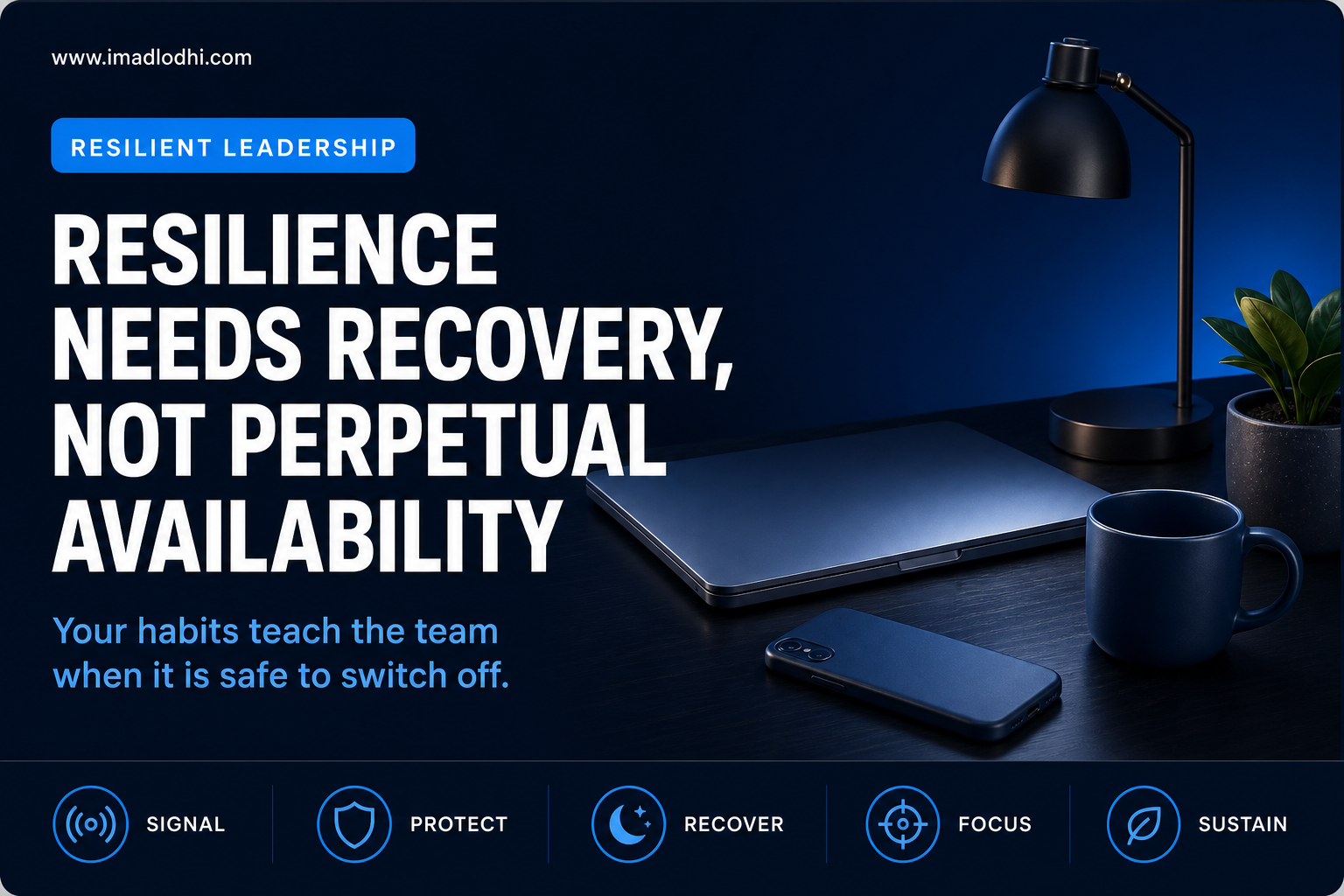
In leadership, we sometimes confuse constant responsiveness with resilience. They are not the same.
Responsiveness can keep delivery moving tonight.
Resilience preserves the team’s capacity to think clearly tomorrow.
You can send a message at 10:47 PM and write, “No need to respond until morning.” But the phone still lights up. People still wonder whether this is the one message they are expected to answer.
Your words may say, “Switch off.”
Your habits may say, “Stay ready.”
Human beings learn from patterns more than disclaimers. When the end of the workday feels unpredictable, part of our attention remains on alert. We may not be actively working, but we are not fully recovering either. Over time, that weakens focus, patience, creativity, and judgment—the very capacities difficult delivery work requires.
This does not mean ignoring a genuine production incident or abandoning people who need support. It means making the exception clear enough that everything does not feel like an emergency.
Try this with your team:
Define what is truly urgent.
Use scheduled send for work that can wait.
Create a fair on-call path when coverage is genuinely needed.
And most importantly, model the boundary yourself.
Resilient teams are not teams that never get tired. They are teams that are allowed to recover, reconnect, and return with capacity.
What leadership habit could you change this week to make it safer for your team to truly switch off?
If you enjoy practical reflections on leadership, culture, and helping people succeed, you can find more at https://www.imadlodhi.com.
#Leadership #EmployeeEngagement #WorkplaceCulture #Resilience #HumanConnection #ITLeadership #EmployeeWellbeing #OrganizationalEffectiveness