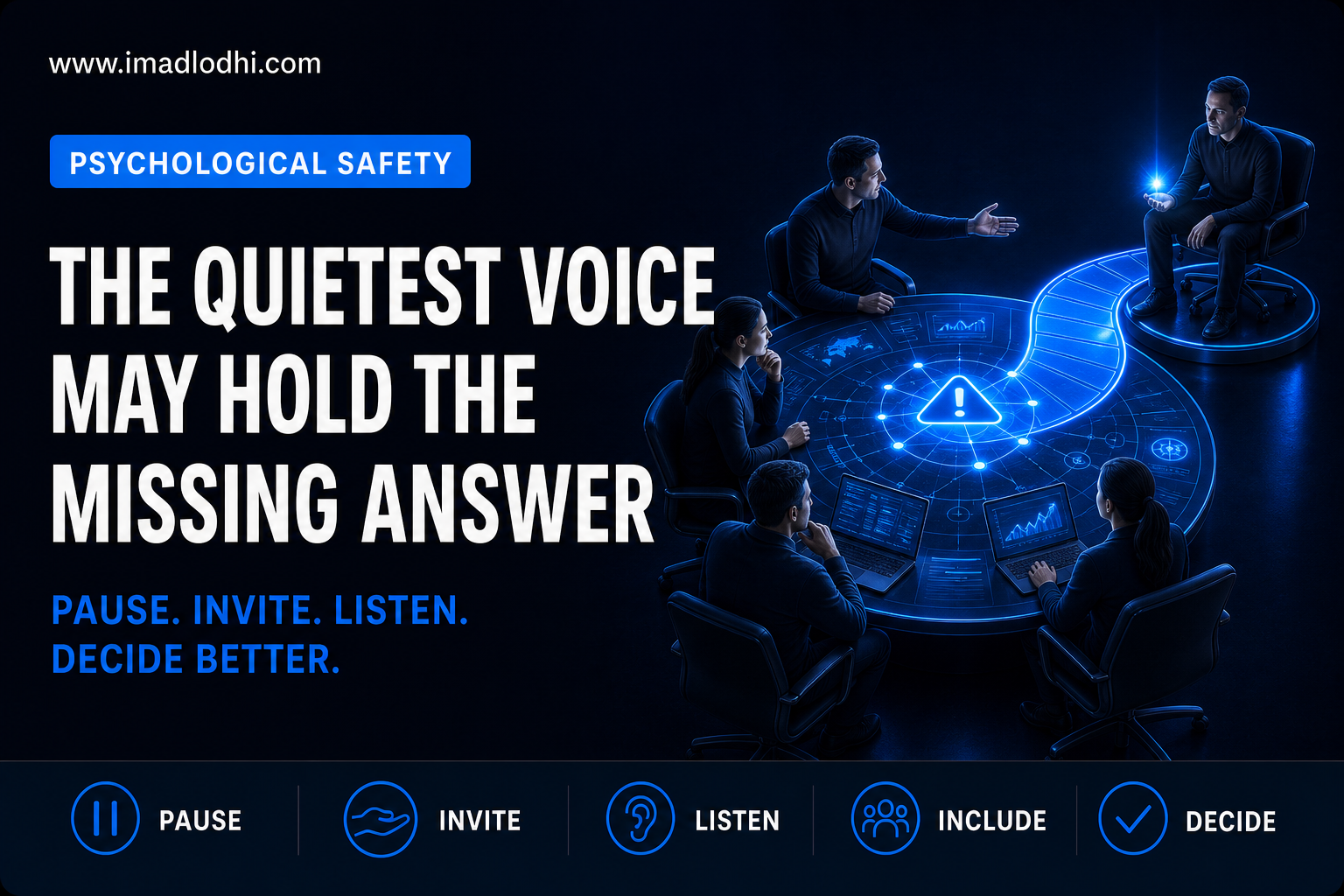
Picture an IT incident call.
The pressure is rising. Leaders want answers. The most confident voices dominate the conversation.
Meanwhile, a quiet analyst has noticed something important—but nobody asks what they are seeing.
Later, the team discovers that the analyst had identified the right pattern much earlier.
We often call this a communication problem. I see it as a leadership problem.
Having capable people in the room is employee enablement.
Creating space for them to contribute is employee empowerment.
Making them feel that their contribution matters is employee engagement.
Under pressure, the brain becomes more sensitive to social threat. If speaking up might bring embarrassment, dismissal, or blame, people naturally become more cautious. Attention narrows, creativity drops, and valuable knowledge stays silent.
That is why psychological safety is not simply about making people feel comfortable. It is operational infrastructure.
A practical habit I encourage leaders to adopt is simple: pause before making the decision and ask:
“Who have we not heard from?”
Then give people enough time to answer.
Leadership is not about being the smartest voice in the room. It is about creating the conditions for the room’s collective intelligence to emerge.
Whose perspective might your team be missing because nobody has intentionally invited it?
For more reflections on leadership and helping people thrive at work, visit https://www.imadlodhi.com.
#Leadership #EmployeeEngagement #EmployeeEnablement #EmployeeEmpowerment #PsychologicalSafety #ITLeadership #WorkplaceCulture #HumanConnection