Here is a moment I have seen in many forms.
A team raises a concern about a delivery decision. The leader listens, weighs the options, and decides to move ahead.
Later, the concern turns out to be valid.
Now everyone walks into the review meeting quietly preparing for what usually comes next: explanations, softened language, or blame passed down the line.
Instead, the leader says:
“I made the call. You raised the risk. I did not give it enough weight. Here is what I will do differently.”
The room changes.
Not because the mistake disappeared. Not because accountability became less important. The room changes because the leader made honesty safer than self-protection.
Leadership is not the performance of always being right. It is the practice of making truth useful, especially when the truth is uncomfortable.
People pay close attention to fairness, status, and how power is used. When a leader protects their ego at someone else’s expense, people can learn to protect themselves too. They may share less, qualify every warning, and spend energy managing perception.
When a leader owns a wrong call clearly and without drama, defensiveness can come down. The team can use its attention for learning, correction, and better judgment.
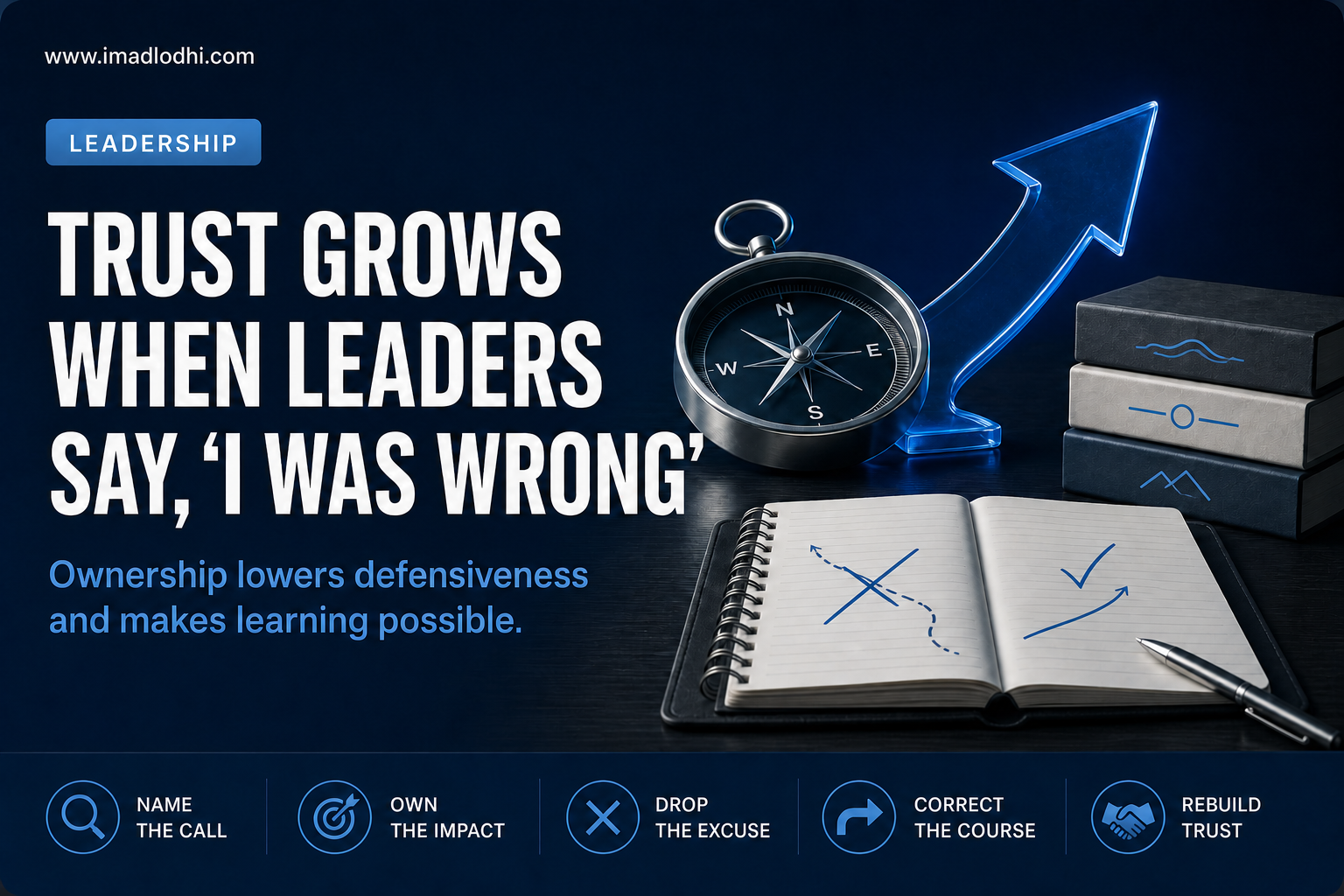
The practical takeaway is simple. When you get a decision wrong:
Name the call you made.
Own the impact it created.
Leave out the excuse.
Explain what you learned and what will change.
Then ask, “What am I still not seeing?”
Humility does not weaken authority. Used well, it gives authority moral weight.
Discussion question: When was the last time a leader’s honest ownership made it easier for you to trust them?