A leader once told me, “We recognize people all the time.”
So I asked him to think about the last big IT delivery win.
The person who restored the service at 2:00 in the morning was thanked publicly. And they deserved it.
But no one mentioned the colleague who had warned about the risk weeks earlier.
No one mentioned the person who had built the monitoring that shortened the outage.
And no one mentioned the teammate who had quietly coached others so the recovery did not depend on one hero.
That conversation stayed with me.
Recognition is not only a reward. It is a signal.
Every time a leader celebrates one kind of contribution, the team learns what earns visibility, status, and opportunity.
If we only praise dramatic rescue work, we should not be surprised when prevention, documentation, mentoring, and knowledge-sharing start to feel less valuable.
Human beings are very attentive to social rewards. Our brains notice which behaviours are associated with approval and belonging, and we adjust accordingly. This is one reason culture is shaped less by the values written on the wall and more by the behaviours leaders repeatedly notice.
Good leaders still recognize the person who steps into the fire.
They simply widen the lens.
After the next win, ask:
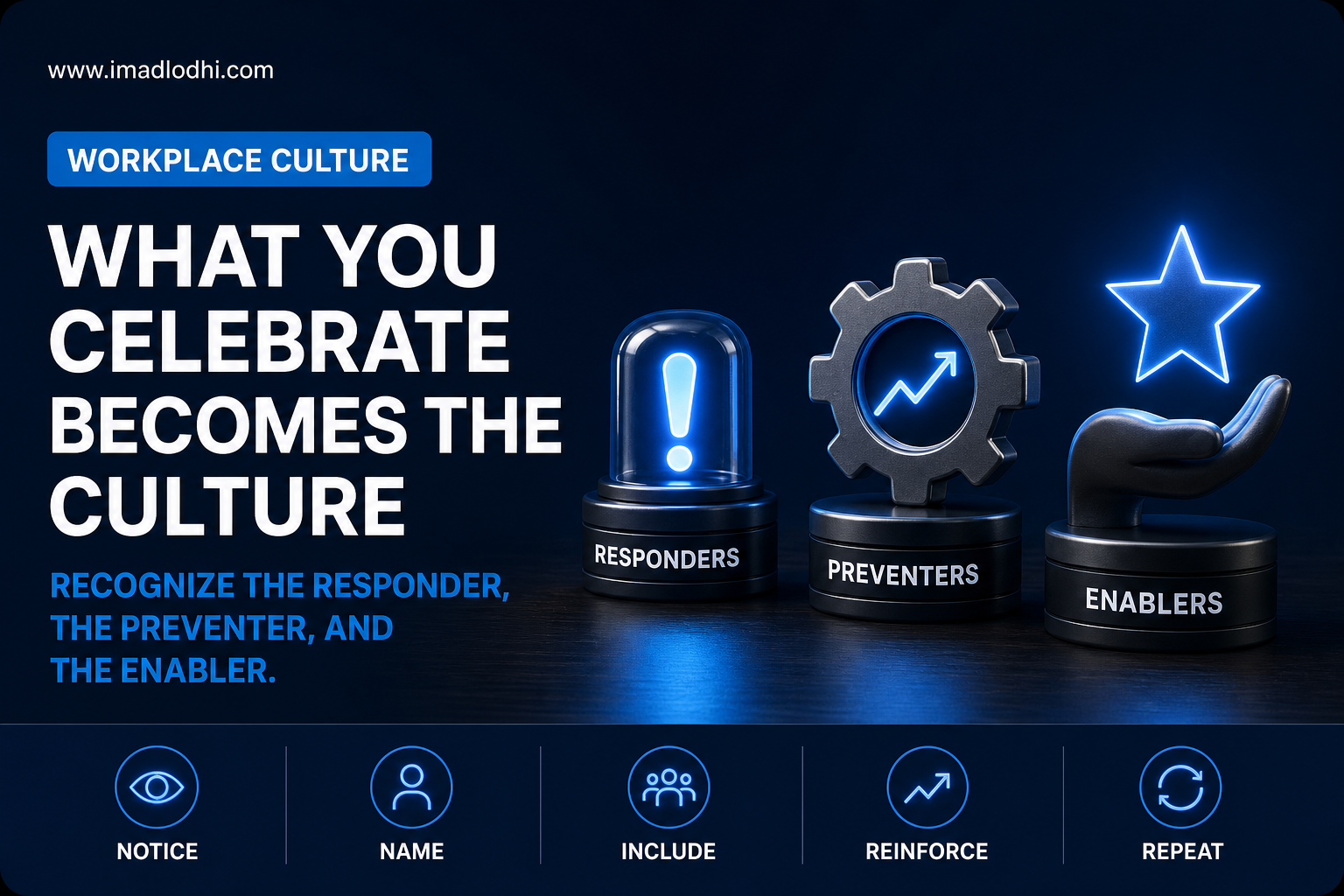
Who responded when it mattered?
Who prevented the problem from becoming worse?
Who enabled other people to succeed?
Then name the specific behaviour and explain why it mattered.
When recognition includes responders, preventers, and enablers, people learn that success is not only about being the visible hero. It is also about making the whole team stronger.
What kind of work does your organization celebrate—and what valuable contribution might still be invisible?
If this way of thinking about leadership and workplace culture is useful to you, I share more reflections at https://www.imadlodhi.com.
#Leadership #WorkplaceCulture #EmployeeEngagement #EmployeeEnablement #EmployeeEmpowerment #Recognition #ITLeadership #HumanBehaviour