You know the meeting.
Deadlines are slipping. The team is exhausted. People are working late, covering vacancies, and jumping between priorities.
Then someone says:
> We need to help the team become more resilient.
It sounds caring. Sometimes it is.
But sometimes `resilience` is the word organizations use when they do not want to say:
> We have designed the work badly.
A resilience workshop cannot create missing capacity. A mindfulness app cannot resolve conflicting priorities. An employee assistance program cannot fix an operating model that depends on the same people repeatedly rescuing the system.
Those supports may still help people. But they cannot replace responsible work design.
Burnout Keeps the Workplace in the Picture
The World Health Organization describes burnout as an occupational phenomenon resulting from chronic workplace stress that has not been successfully managed. It is not classified as a medical condition.
That distinction matters.
Managers should not diagnose employees. A tired, frustrated, or disengaged employee is not automatically experiencing burnout.
But leaders should examine workplace conditions when strain becomes a pattern.
The Canadian Centre for Occupational Health and Safety describes workload management as creating conditions in which people can complete their responsibilities within the available time. It also points to the importance of adequate equipment, support, and resources.
Workload is not simply how much work sits in the queue. It is the relationship between expectations and the capacity to meet them.
The Corporate and IT Delivery Test
Imagine a service-delivery team that loses two experienced employees. The vacancies stay open. Major incidents increase. The strongest people are repeatedly pulled into escalations because everyone trusts them to save the day.
Leadership sees declining performance and schedules a resilience session.
The session may be well intentioned, but it does not change the mathematics of the work.
The same people return to the same queue, the same on-call schedule, and the same expectation that good employees will compensate for a weak system.
Sooner or later, hero culture sends the bill.
Three Questions Leaders Should Ask
Before asking employees to cope better, ask:
1. **Can the work reasonably be completed in the time available?**
2. **What will stop, move, or receive more capacity when a new priority is added?**
3. **Do employees have the tools, authority, information, and support required to succeed?**
If everything is a priority, the team does not have priorities. It has pressure.
Resilience still matters. People deserve support, useful resources, and managers who know how to respond respectfully when someone is struggling.
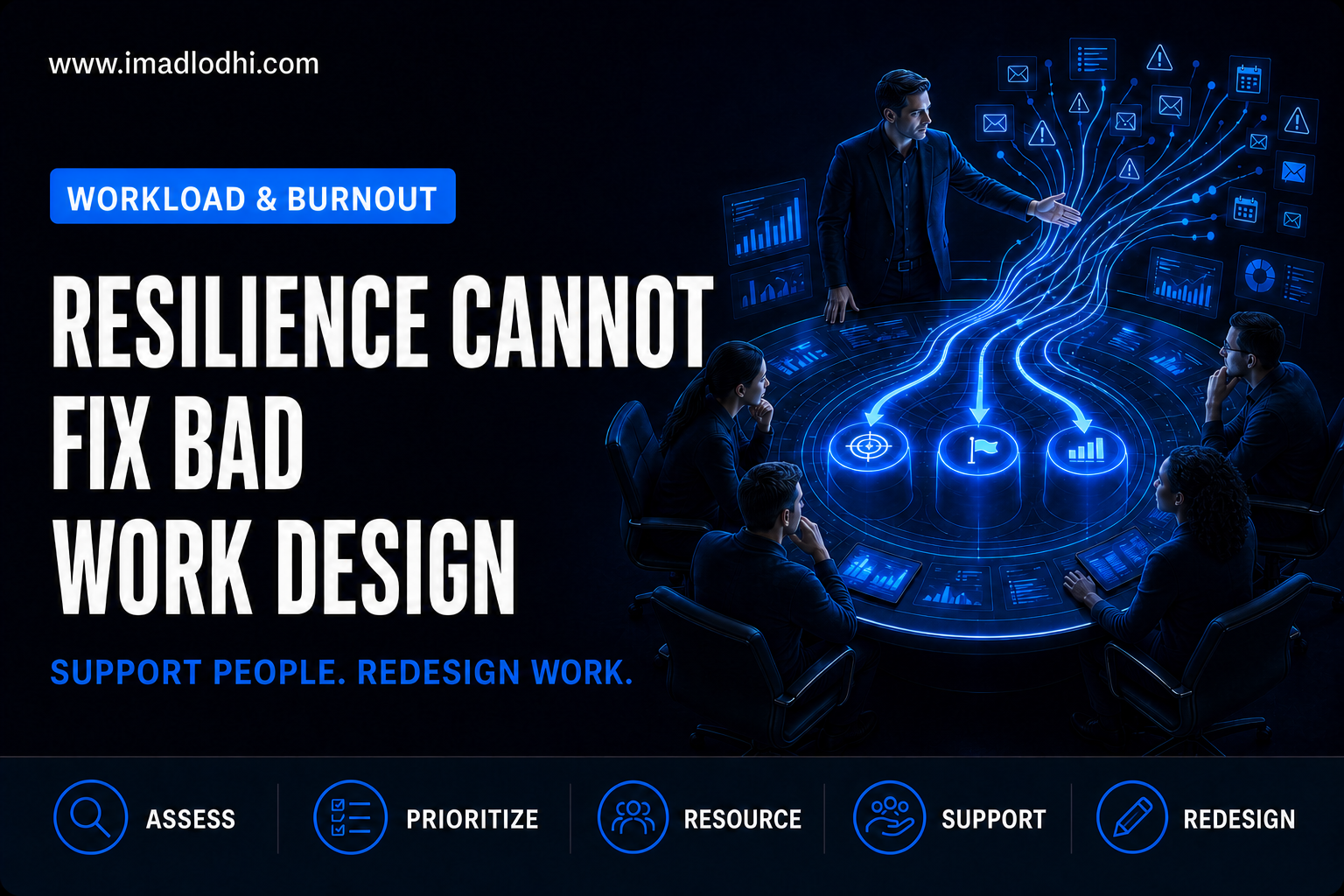
But support and work redesign are not competing choices. Responsible leaders do both.
Resilience should help people move through difficult seasons.
It should not be the price of admission to an unhealthy system.
**When your organization sees signs of strain, what does it examine first: the person or the work?