You know the email.
“We want to hear from you.”
Employees are asked about workload, support, trust, and whether leaders listen. A few weeks later, a polished slide deck appears. The scores are discussed. A wellness webinar is announced. Then the organization returns to the same priorities, meetings, and deadlines that people just described.
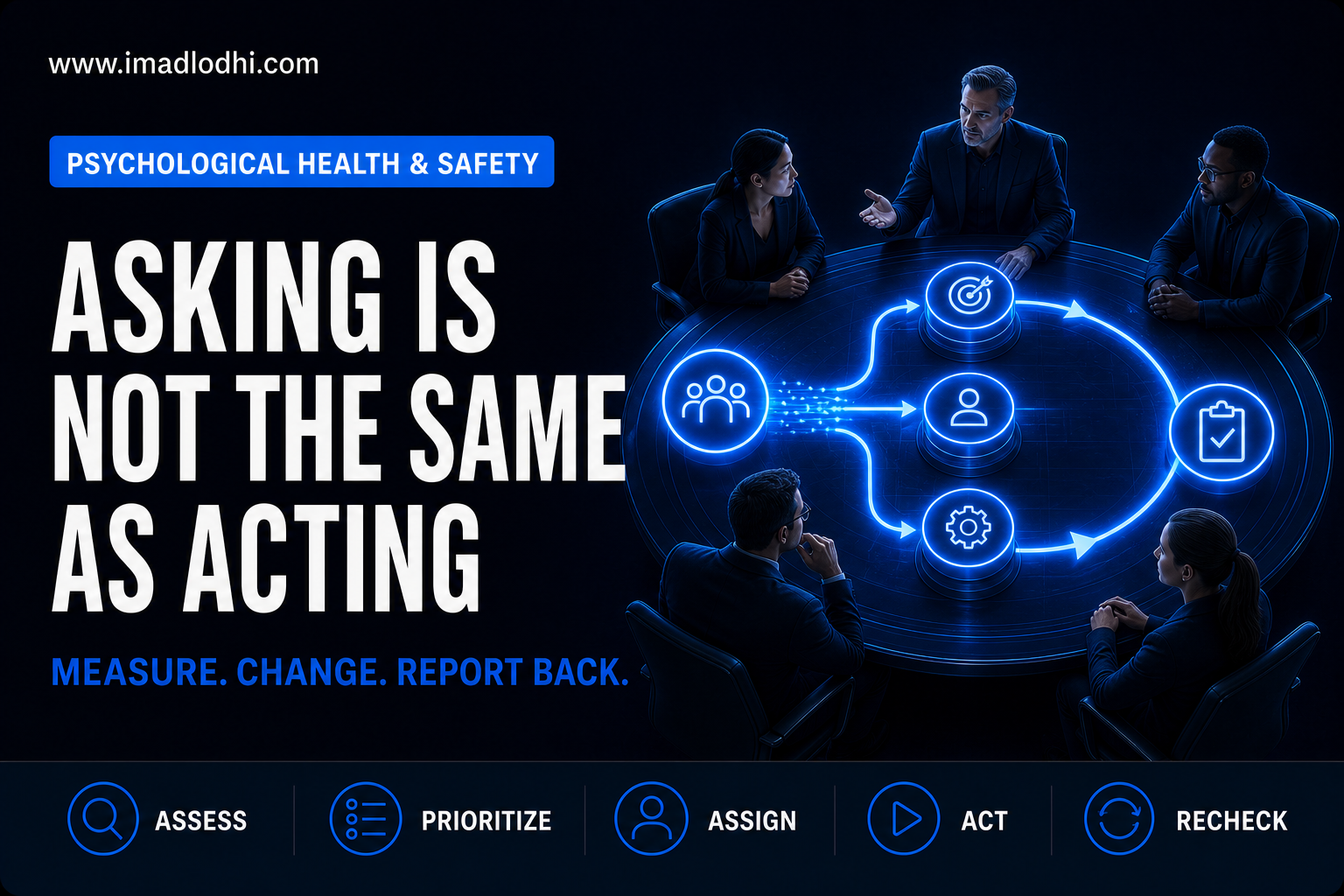
Here is the uncomfortable truth: asking about workplace mental health is not the same as acting on what shapes it.
The Dashboard Is Not the Destination
Consider this explicitly hypothetical example.
An enterprise software division runs an annual employee survey. For two years, responses point to unclear priorities, limited influence over delivery plans, and reluctance to raise capacity concerns. Leaders publish the results, ask managers to hold listening sessions, and promote individual support resources. No executive owns the recurring work-design issues. No delivery commitment changes. By the next survey, employees are being asked the same questions again.
The survey may be useful. It is not a diagnosis of any person, and it does not prove that work caused a health condition. It is one source of information about organizational conditions that deserve a closer look.
The Canadian Centre for Occupational Health and Safety says organizations will likely need more than one assessment method to understand psychosocial hazards. Surveys can provide a broad picture; discussions, observations, internal data, and reviews of policies and work practices can add context. CCOHS also advises prioritizing controls that address the source of a hazard and affect the organization, rather than focusing only on steps individuals can take.
The World Health Organization similarly recommends assessing psychosocial risks when planning organizational interventions and integrating that assessment into regular occupational-health risk monitoring, including during organizational change. Its recommendation for broad organizational interventions is conditional and based on very-low-certainty evidence. That limitation matters: leaders should test, monitor, and adjust—not promise that one intervention will produce a particular health outcome.
Three Leadership Actions
1. Triangulate the signal.
Combine anonymous survey themes with facilitated discussions, work-process reviews, and appropriate operational data. Protect confidentiality. Look for conditions leaders can change, not employees to label.
2. Assign controls, owners, and dates.
Choose a small number of material risks. Name the executive accountable, the resources available, the change being tested, and when progress will be reviewed. A listening session without decision rights is conversation, not control.
3. Close the loop and reassess.
Tell employees what was heard, what will change, what will not, and why. Then evaluate whether the control was implemented and whether work is experienced differently. The National Standard of Canada and ISO 45003 both frame psychological health and safety as systematic, continuing work—not an annual communications event.
Individual support still matters. People may choose workplace resources or qualified professional care. Organizational responsibility is different: leaders own the conditions, controls, resources, and follow-through within their authority.
Three Takeaways
- A survey is an assessment tool, not a completed strategy.
- Participation builds insight only when it connects to decisions and action.
- Credibility grows when leaders report back and keep improving the work.
Discussion question: What did your organization change after it last asked employees how work was affecting them?