I once asked a manager what he covered in his one-on-ones.
He walked me through project milestones, open risks, overdue actions, and next week’s deliverables.
It was a thorough answer.
But I remember thinking: you have described a status meeting. Where is the person?
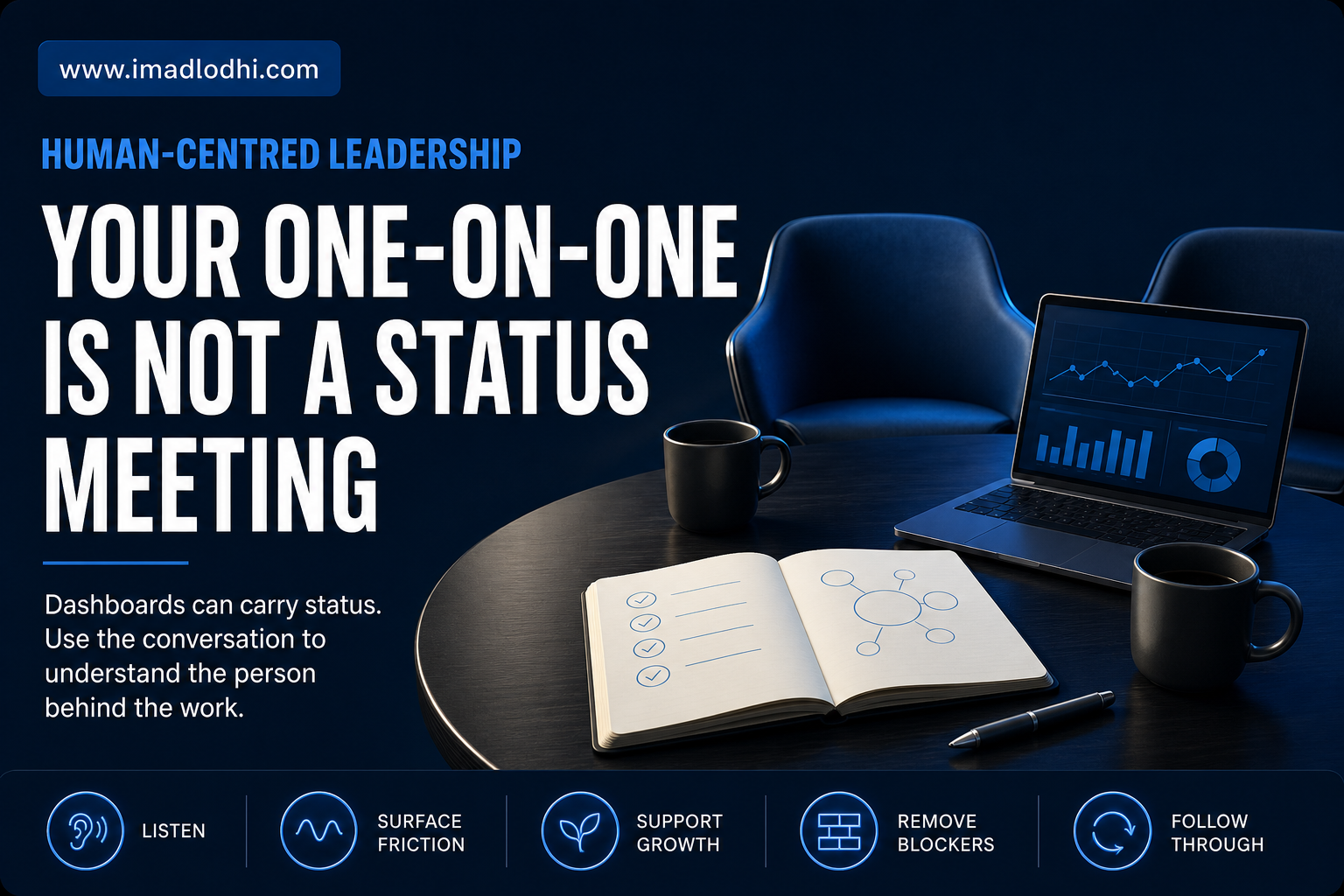
The dashboard can tell you whether the work is red, amber, or green. A one-on-one should help you understand what the dashboard cannot:
What is taking more energy than it should?
Where is this person stuck but hesitant to say so?
What are they trying to learn?
What support do they need from you?
At a human-behaviour level, people pay close attention to status, belonging, and how authority responds to vulnerability. When every conversation with a leader feels like an evaluation, people naturally start managing impressions. They bring polished updates and leave the real friction unspoken.
That is not a character flaw. It is self-protection.
A good one-on-one creates a different signal: this is a place where we can look at the work honestly, without reducing you to the work.
That does not mean avoiding accountability. It means making accountability useful. We can discuss missed commitments and still ask what got in the way. We can address performance and still care about development. We can be clear about expectations and still listen with empathy.
Try opening your next one-on-one with three questions:
What is going well that I may not be seeing?
What is creating friction for you right now?
What can I do to help you succeed without taking ownership away from you?
Then listen long enough for the first polished answer to give way to the honest one.
If your team member left your last one-on-one feeling seen, supported, and clear, what did you do to make that possible?
If this way of leading resonates with you, I share more reflections on leadership, culture, and helping people succeed at https://www.imadlodhi.com.
#Leadership #EmployeeEngagement #PeopleLeadership #WorkplaceCulture #Mentoring #EmployeeEnablement #HumanConnection #ITLeadership