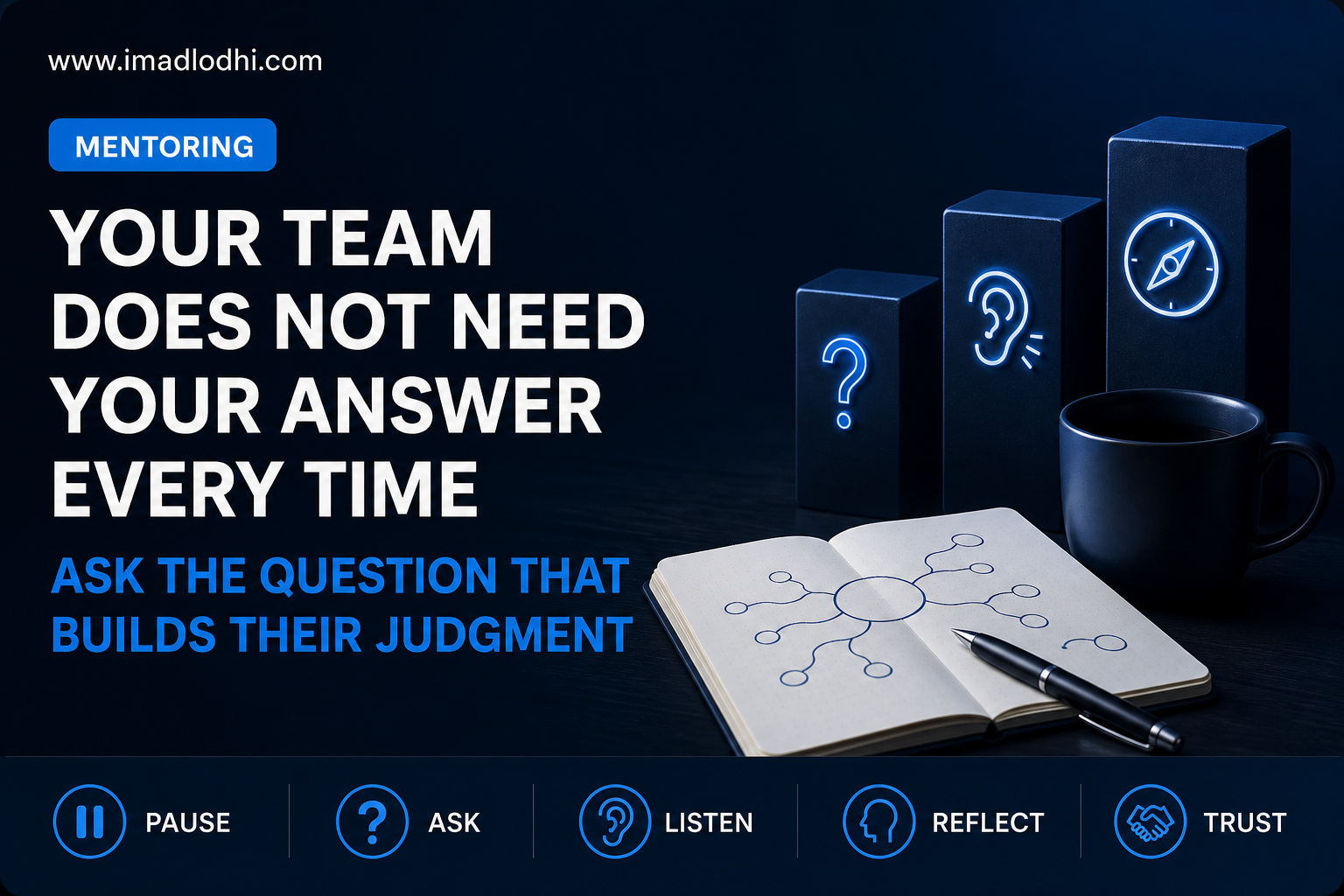
Picture a capable team member sitting across from you with a problem.
You have seen this problem before. You know the answer. And because you want to help, you give it to them.
The issue is resolved quickly.
But something else may have happened: you solved today’s problem without helping them build tomorrow’s judgment.
This is one of the quiet tensions in leadership. Experience makes us faster at answering. Mentoring asks us to slow down long enough for someone else to think.
When a leader supplies every answer, the team can learn to bring problems upward. When a leader asks thoughtful questions, people have space to examine assumptions, connect what they already know, and take greater ownership of the decision.
That kind of reflection is active work. When people explain their reasoning, they make the invisible parts of judgment visible—to themselves and to you. Research on managerial coaching also suggests it can support critical reflection, in part through a stronger learning orientation (https://doi.org/10.1108/JWL-06-2019-0086).
So before offering your solution, try asking:
What are you seeing?
What options have you considered?
What risk concerns you most?
What would you choose if I were not available?
Then listen. Add context they could not reasonably know. Clarify the boundaries. Offer support. But leave as much of the thinking—and the ownership—with them as the situation safely allows.
Good mentoring is not withholding expertise. It is lending perspective without taking away responsibility.
Where might one better question build more capability than one more answer?
If this approach to leadership resonates with you, you’ll find more reflections at https://www.imadlodhi.com.
#Leadership #Mentoring #EmployeeEmpowerment #EmployeeEnablement #EmployeeEngagement #ITLeadership #WorkplaceCulture