I’ve worked with teams where the manager seemed to know everything.
Every exception. Every customer promise. Every workaround. Every person to call when something broke.
At first glance, that manager looked indispensable.
That was the problem.
When the operating model lives in one person’s head, the team hasn’t built management capability. It has built management dependency.
You see it quickly in IT service delivery. A Service Desk manager knows which analyst can handle the difficult executive, which tickets can quietly wait, which escalation path actually works, and which report needs “explaining” before anyone sees it.
Then the manager takes a week off.
Suddenly priorities become debatable. Escalations bounce around. People ask, “What would the manager normally do?” Meetings become status archaeology. A few experienced employees keep things moving through memory and goodwill.
Everyone is working hard. The system is not.
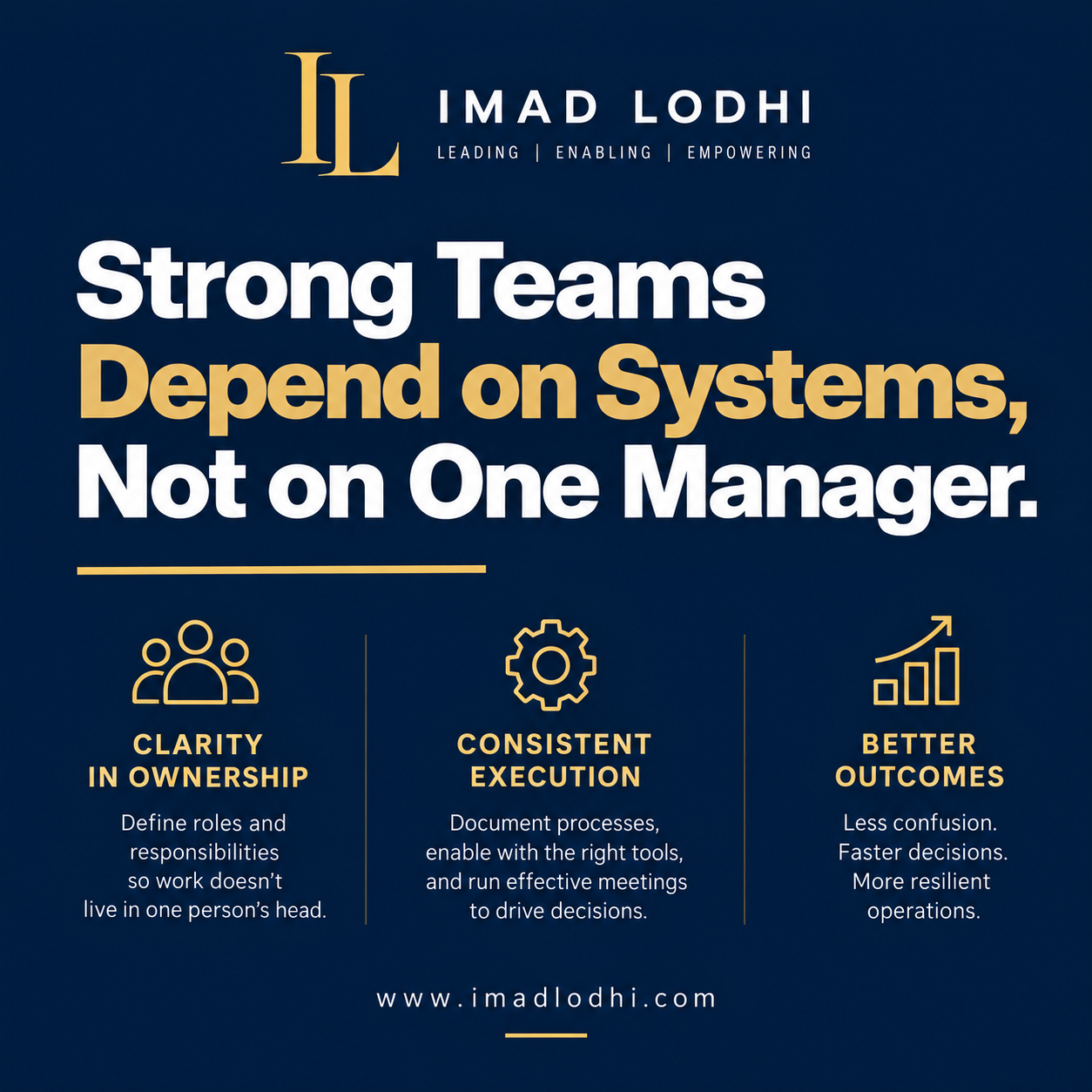
This is why I keep coming back to management systems. Roles and responsibilities should make ownership visible. Processes should capture how recurring work is handled. Tools should support the workflow instead of becoming another place to hunt for information. Meetings should drive decisions. Reporting should tell us what is happening without requiring a translator.
The goal is not to eliminate judgment. Good managers use judgment constantly.
The goal is to stop wasting judgment on things the operating system should already know.
I sometimes use a simple test: if the manager disappeared for two weeks, would the team slow down—or become confused?
Slowing down is understandable. Confusion is diagnostic.
A strong manager should make a difference when they are present. They just shouldn’t be the human hard drive keeping the department from crashing.
If you’re dealing with something similar—or want to explore what stronger management systems could look like in your operation—I’m always happy to compare notes.


