

Technology & Tools
What Is Hybrid Cloud And What Are The Benefits Of Using It
A hybrid cloud is a mix of on-premises, private cloud and public cloud services with orchestration and automation between them. Moving to a hybrid cloud model can offer numerous benefits for businesses, from increased agility and scalability to reduced costs.
Companies today are facing the challenge of managing their IT infrastructure and resources effectively while also meeting the demands of their customers and stakeholders. Traditional IT infrastructure, which relies on a single type of deployment (such as on-premises or public cloud), can be inflexible and unable to adapt to changing business needs.
This inflexibility can lead to inefficiencies and limitations in the organization's ability to scale and innovate. For example, an on-premises infrastructure may not have the capacity to handle sudden spikes in demand, leading to downtime and lost revenue. Similarly, a public cloud infrastructure may not provide the level of security or control that an organization requires.
One solution to this problem is to use a hybrid cloud deployment model. A hybrid cloud combines the benefits of both on-premises and public cloud infrastructure, allowing organizations to choose the deployment option that best meets their needs. This flexibility allows organizations to optimize their IT resources, reduce costs, and improve their ability to scale and innovate. Some of the benefits of using a hybrid cloud include: 1-Flexibility: A hybrid cloud allows organizations to choose the deployment option that best meets their needs, whether that is on-premises, public cloud, or a combination of both. 2-Cost savings: By using a hybrid cloud, organizations can take advantage of the cost savings and economies of scale offered by public cloud providers while also maintaining control over their critical systems and data. 3-Improved scalability: A hybrid cloud enables organizations to scale their IT resources up or down as needed, helping to ensure that they have the capacity to meet changing business demands. 4-Enhanced security: A hybrid cloud allows organizations to maintain control over their sensitive data and systems while also taking advantage of the advanced security measures offered by public cloud providers.
A hybrid cloud is a type of cloud computing that combines on-premises infrastructure—or a private cloud—with a public cloud. The idea is to take advantage of the strengths of both types of environments. For example, an organization might keep sensitive data on-premises for security reasons, but store less sensitive data in the public cloud. Conversely, an organization might use the public cloud for storage during times of high demand, but keep most data on-premises to save money.
The key benefits of using a hybrid cloud are flexibility, scalability, and redundancy. With a hybrid cloud, organizations can quickly adapt to changing needs without incurring the enormous costs associated with building and maintaining their own private clouds.
Hybrid clouds also offer greater scalability than private clouds, since they can take advantage of the vast resources of the public cloud. And finally, hybrid clouds provide built-in redundancy, since data is stored in both on-premises and off-premises environments. This reduces the risk of data loss in the event of a disaster. Overall, hybrid clouds offer a number of advantages that make them an attractive option for many organizations.
What is the process to assess if an organization is ready for the hybrid cloud
The process to assess if an organization is ready for the hybrid cloud begins by evaluating the organization's needs and requirements. This includes assessing what applications and workloads would be a good fit for the hybrid cloud model, as well as what services the organization would like to use from the public and private clouds.
Once the organization has a clear understanding of its needs, it can then work with a provider to select the right mix of services and infrastructure. This provider should be able to provide the necessary expertise and support to help the organization transition to the hybrid cloud. By taking these steps, any business can assess if it is ready for the hybrid cloud.
What are some reasons organizations fail in their cloud journey
There are a number of reasons why organizations can fail in their cloud journey, but some of the most common are a lack of understanding of the cloud and its benefits, lack of planning and execution, and security concerns.
A lack of understanding of the cloud can lead to unrealistic expectations about what the cloud can do for an organization. Organizations that don't plan and execute their migration to the cloud properly often experience problems such as downtime and data loss. And finally, security concerns are often cited as a reason for not moving to the cloud. While these concerns are valid, they can be addressed through careful planning and execution. By taking these steps, any organization can minimize the chances of failure in its cloud journey.
What are the risks associated with hybrid cloud and why are some organizations hesitant to move to the cloud
As the world becomes increasingly reliant on cloud-based services, many organizations are turning to hybrid cloud solutions that combine on-premises infrastructure with a public cloud. However, hybrid cloud can introduce a number of new risks, including data breaches, vendor lock-in, and increased complexity. Perhaps most importantly, hybrid cloud can make it difficult to achieve the full benefits of the cloud, such as rapid scalability and reduced capital expenditures. As a result, some organizations are hesitant to move to the hybrid cloud model. Nonetheless, when properly managed, hybrid cloud can be a powerful tool for unlocking the potential of the cloud.
Do organizations and service providers have the skills and capabilities to implement hybrid cloud
Organizations and service providers have the skills and capabilities to implement hybrid cloud, but they need to be willing to invest the time and resources required to do so. Hybrid cloud can be a complex and challenging technology to implement, but the benefits are clear. With hybrid cloud, organizations can enjoy the best of both worlds: the flexibility and scalability of the public cloud, with the security and control of the private cloud. In order to make the most of hybrid cloud, organizations need to carefully assess their needs and requirements, and then select a provider that can meet those needs. With the right provider in place, organizations can reap the benefits of this powerful technology.
Can hybrid cloud providers be trusted
The rise of hybrid cloud providers has been accompanied by a lot of skepticism and mistrust. There are many valid concerns about the security of data stored in the cloud, and whether or not these providers can be trusted to keep our information safe. However, I believe that hybrid cloud providers can be trusted. These companies have invested heavily in security, and they have a vested interest in protecting their customers' data. In addition, the use of encryption and other security measures has made it possible to store data safely in the cloud. As long as we take precautions and do our due diligence, I believe that hybrid cloud providers can be trusted to keep our data safe.
How can your organization benefit from moving to a hybrid cloud model
A hybrid cloud is a mix of on-premises, private cloud and public cloud services with orchestration and automation between them. Moving to a hybrid cloud model can offer numerous benefits for businesses, from increased agility and scalability to reduced costs. The ability to rapidly provision new applications and workloads without the need for additional infrastructure is a major advantage of hybrid cloud, as is the ability to take advantage of the economies of scale provided by public cloud providers. In addition, hybrid cloud provides the added flexibility of being able to run some workloads on-premises for compliance or other reasons. For organizations looking to get the most out of their IT investments, hybrid cloud is an attractive option.
In the end, the decision of whether or not to move to hybrid cloud comes down to each individual organization. Weighing the pros and cons and making a decision based on your specific needs is critical. The benefits of hybrid cloud are many, but so are the risks. Organizations need to have the skills and capabilities in place to properly implement hybrid cloud before making the switch. Additionally, they must carefully consider which service providers they can trust with their data. With careful planning and execution, any organization can benefit from moving to a hybrid cloud model. What are your thoughts on hybrid cloud? Is it something you're considering for your organization?
Are you interested in learning more about hybrid cloud and the benefits it can offer your organization? Subscribe to my blog to stay up-to-date on the latest developments and best practices in the world of hybrid cloud. From case studies and technical deep dives to industry trends and expert insights, my blog has everything you need to stay informed and make informed decisions about your organization's IT infrastructure. Don't miss out – subscribe today and start taking advantage of all that hybrid cloud has to offer. https://www.imadlodhi.com/subscribe

Contact Center
Contact Center Rescue Series: Root Cause Analysis Program
Root cause analysis is important in the contact center because it helps to identify the underlying causes of issues or problems, rather than just addressing the symptoms. By conducting a root cause analysis, contact center managers can identify the root causes of issues such as customer complaints, high call volume, or poor agent performance, and then implement targeted solutions to address these underlying causes.
The contact center is experiencing issues with the current root cause analysis system, resulting in ineffective problem-solving and a lack of resolution for customer issues.
The root cause analysis process is not consistently identifying the true underlying cause of problems, leading to a high rate of repeat issues and customer dissatisfaction. The time and resources being spent on root cause analysis are not yielding the desired results, leading to frustration and inefficiency within the team. This issue is causing a negative impact on the overall customer experience and the efficiency and effectiveness of the contact center.
It is critical that a solution is implemented to improve the root cause analysis system in order to address these issues and improve the overall performance of the contact center. This could include implementing a new root cause analysis methodology, providing training on effective root cause analysis techniques, or implementing tools and systems to support the root cause analysis process. By addressing the issues with the current root cause analysis system, the contact center can improve problem-solving and resolution rates, leading to increased customer satisfaction and a more efficient and effective operation.
Root cause analysis is important in the contact center because it helps to identify the underlying causes of issues or problems, rather than just addressing the symptoms. By conducting a root cause analysis, contact center managers can identify the root causes of issues such as customer complaints, high call volume, or poor agent performance, and then implement targeted solutions to address these underlying causes. This can help to prevent these issues from recurring in the future, and improve the overall performance and efficiency of the contact center. Additionally, root cause analysis can also help to identify opportunities for process improvement and innovation, which can support the long-term success and sustainability of the contact center. Overall, root cause analysis is an essential tool for identifying and addressing the underlying causes of issues in the contact center.
The Root Cause is the factor, or factors, that when eliminated or changed, will prevent the recurrence of a given or like problem.
Root Cause Analysis (RCA) is a technique to identify, document and implement cost-effective solutions to eliminate the actual cause of a problem, not just the symptoms, and prevent recurrence of the same or like problem.
Why is Root Cause Analysis (RCA) Important?
- Improve customer satisfaction
- Improve our processes/procedures
- Prevent recurrence of problems
- Make the best use of people and resources
When is Root Cause Analysis (RCA) performed?
Perform the analysis as soon as possible after service is restored to facilitate documentation of all pertinent details:
- A complete description of the business impact
- Technical details, including error codes, etc.
- Timeline of events, including actions taken and the responsible personnel
Problem Cause vs Root Cause Analysis (RCA)
A Problem Cause Investigation is required for all problems and failed changes. It is the description of how the problem was resolved and should be documented in the Resolution text of the problem record (or change record). Documentation should include:
- Cause(s) of a problem
- Contributing factor(s)
- Description of how service was restored
- Description of resolution of the problem
Root Cause Analysis (RCA) is determining the true cause of the problem, as opposed to the symptoms which appear as a result of the problem. This is a more in-depth analysis that is performed in a separate RCA record. Documentation in the RCA record should include at least the following:
- Root cause(s)
- Contributing factor(s) and symptoms
- References to incident(s) and problem(s
- Description of permanent fix and future prevention
A Root Cause Analysis (ie. “formal RCA”) is to be documented:
- Major Incidents (Priority 1 and 2)
- A special request based on: Examples – Trend analysis, Service Level reviews, or Problem analysis requested by the business
- Failed changes causing an unplanned outage
- Any Unauthorized changes
The following are the guiding principles when implementing a Root Cause Analysis Methodology:
Define the Problem
- A problem is any deviation from an expected norm. That is, any event resulting in a loss or potential loss of the availability or performance of a managed IT resource or its supporting environment. (This includes errors related to systems, networks, hardware, software, and applications. This can also include problems identified during the implementation of (failed) changes. The recognition of problems can come from any point in the environment and can be identified using a variety of automated and non-automated methods.)
- Clearly identify and describe the problem. (What was affected (resource name)?, What was the impact (i.e. system down)?, Who was impacted?, When did the problem happen?, How long did the problem last?) (1- Need to focus your RCA and preventative actions on specific issues. 2- Need to insure focus is not on just solving the symptoms, but getting to the actual root of the problem. 3- During the root cause analysis multiple problems may appear that should be addressed separately but captured as action items. 4- Restate the problem and resolution in the RCA document to ensure everyone understands what the issue was when it occurred. )
List Presumptive Causes
- Presumptive causes are identified at the beginning of the investigation. They are the initial suppositions or thoughts on the root cause of the problem. Thorough root cause analysis may later show they are only symptoms or contributing factors. (Example of presumptive cause: When the cable modem connection is plugged into a workstation, the green light does not appear. The cable is plugged into another the and it works, so the cable can be ruled out. It appears the problem is the network adaptor card which is a hardware issue. However further discussion leads to discover the device driver had been changed when diagnosing a faulty router. Once the setting was revised to the original device driver, the light appeared and connectivity was obtained. The device driver was determined to be the root cause. The network adaptor and cable were presumptive causes.)
5-WHY Decomposition Methodology
- The ‘Five Whys’ is the simplest method for root cause analysis. Take each presumptive cause and ask ‘why’ continuously until you exhaust that line of questioning. (Five Whys is the most commonly used method for determining root cause. The root cause is usually found by the fifth ‘why’ but can take more or less iterations, depending on the problem.)
- Note: If there are multiple presumptive causes, you should complete the ‘five whys’ for each one.
- Identify Root Cause(s) and Contributing Factor(s)
- Root Cause(s), if eliminated or changed, will prevent the recurrence of a given or like problem. Contributing factor(s) alone would not have caused the problem but are important enough to need corrective action to improve the quality of the process. They could also be items that made problem determination or recovery more difficult.
- For each item identified during the ‘five whys’ decomposition, Ask these questions to determine whether the Root Cause has been discovered or just a Contributing Factor:
- If this item is fixed, will it prevent the problem from recurring? If Yes, then Root Cause Yes and Contributing Factor No.
- Did this item delay restoration of service or recovery? If No, then Root Cause No and Contributing Factor Yes.
- Did this item delay problem determination? Or make it more difficult? If No, then Root Cause No and Contributing Factor Yes.
Identify Action Plans
- What must be changed to prevent the recurrence of each root cause and contributing factor? (Hardware, Software, Procedures, Resources).
- Circumvention – Immediate action taken to restore function.
- Future Prevention – Additional actions are required to insure the problem does not recur. May require Change Management.
- Action plans are used for future prevention. It is possible that the immediate action (circumvention) might be the only action for future prevention, however, if it is deemed a temporary solution and/or other items need to be addressed to eliminate contributing factors, an action plan should be put in place.
- Each action item should contain: Description of the activity, Target completion date, Person responsible for implementation.
Communicate Lessons Learned
- RCA meetings, Team meetings, Outlook, Team newsletters, Updated procedures and checklists, Data Repositories.
- Use a quantitative approach to capture and assess the impact.
- Use a qualitative approach to document the details of the impact.
Summary: Finding the Root Cause will prevent the recurrence of a given or like problem. Identifying and implementing good action plans results in improved customer satisfaction, availability, and maximizes productivity. Root Cause Analysis is not the assignment of blame; it helps ensure continuous improvement
The Five Whys, Is a technique that can help with solving problems, Provides us with a structure we can use to understand the relationships between possible causes of the problem, Gives us a framework for planning what data to collect, and Serves as a visual display.
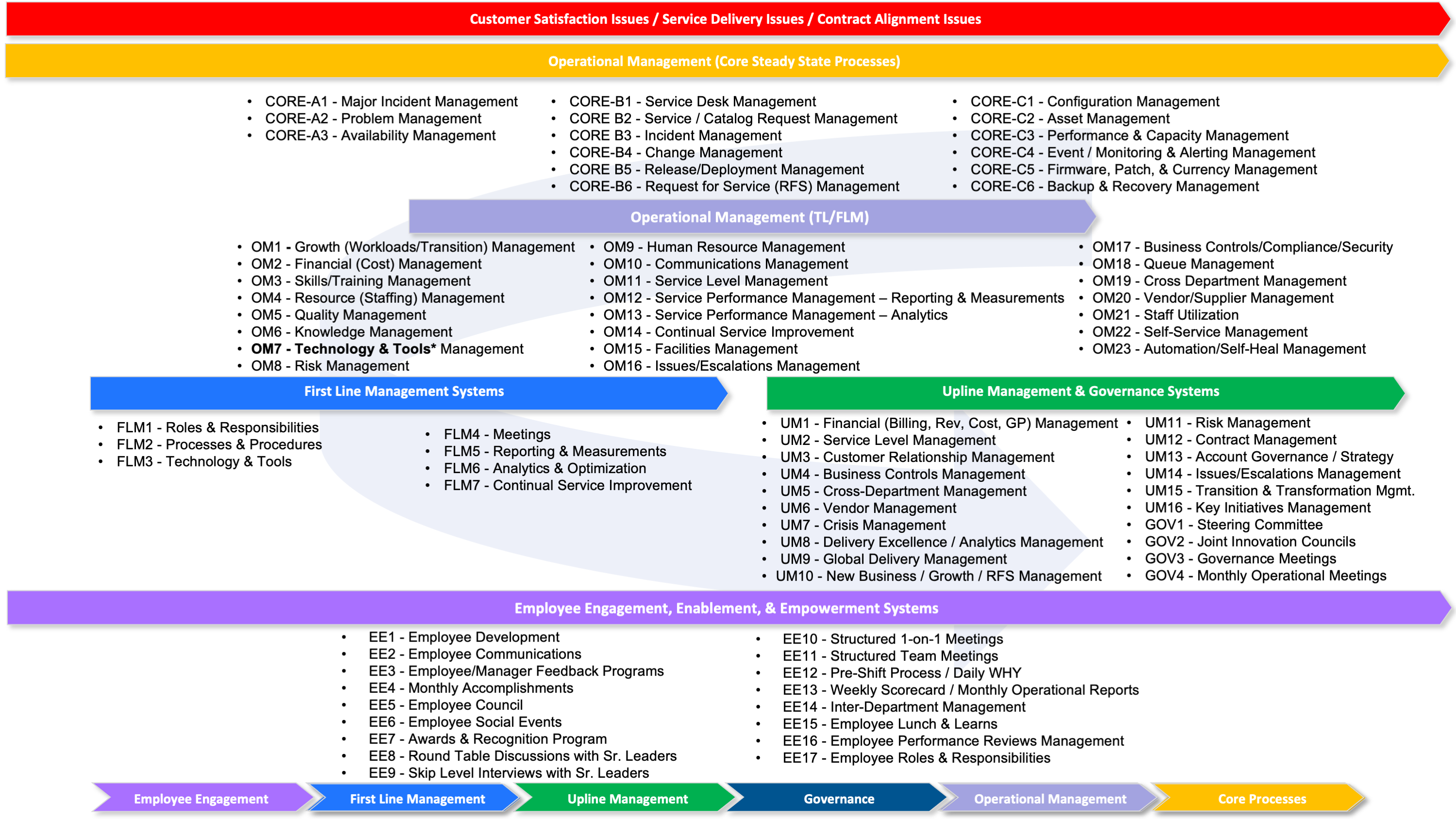
Exercise: What elements of the Operational Management Framework do you think have an impact on the RCA Program?
Subscribe To My Blog To Learn More: https://www.imadlodhi.com/subscribe


Leadership
The Left-Brain and Right-Brain Dichotomy When It Comes To Leadership
While left-brain thinking is more analytical and logical, right-brain thinking is more creative. Leaders who are strong in left-brain thinking can be great at problem-solving and making decisions, while those with strong right-brain skills can be great at coming up with new ideas and inspiring others. It's important for leaders to have a balance of both left and right brain skills,
The left-brain and right-brain dichotomy is a popular but oversimplified model that suggests that the left hemisphere of the brain is more analytical and logical, while the right hemisphere is more creative and emotional. This dichotomy is often used to explain differences in behavior, personality, and even leadership style. However, research has shown that this model is not entirely accurate and can be misleading.
The problem with the left-brain and right-brain dichotomy is that it can be harmful to leaders and organizations. It can lead to stereotypes and biases about what makes a good leader, and can even influence hiring and promotion decisions. It can also create pressure for leaders to conform to certain expectations based on their supposed "brain type," rather than allowing them to be themselves and bring their unique strengths and skills to the table.
A more nuanced and accurate approach to understanding leadership is needed. Rather than relying on simplistic notions of left-brain and right-brain thinking, it is important to recognize that all individuals have a range of abilities and that these abilities can be developed and strengthened. A more comprehensive understanding of leadership can help to create a more diverse and inclusive workplace and allow leaders to be authentic and bring their full selves to their roles.
Left-brain thinking is more analytical, while right-brain thinking is more creative
Throughout history, there have been many debates over which side of the brain is responsible for certain kinds of thinking. However, recent research has shown that both sides of the brain are involved in all kinds of thinking, but that each side tends to be dominant in different kinds of tasks. For example, left-brain thinking is more analytical and logical, while right-brain thinking is more creative and intuitive. This is not to say that one side is better than the other, but simply that each side has its own strengths and weaknesses. When it comes to problem-solving, both left and right-brain thinking are essential. The key is to find a balance between the two sides.
Leaders who are strong in left-brain thinking can be great at problem-solving and making decisions, while those with strong right-brain skills can be great at coming up with new ideas and inspiring others
While there are many different leadership styles, those who are strong in left-brain thinking tend to be great at problem-solving and making decisions. This is because they are able to analyze data and come up with logical solutions. On the other hand, leaders who are strong in right-brain thinking can be great at coming up with new ideas and inspiring others. This is because they are able to tap into their creative side and come up with innovative solutions. However, the best leaders are usually those who are able to use both sides of their brain. By harnessing the power of both logic and creativity, they are able to come up with the best possible solutions to problems and inspire others to achieve their goals.
It's important for leaders to have a balance of both left and right brain skills, as each offers its own unique advantages
Leaders must be able to see the big picture and make strategic decisions, but they must also be able to pay attention to details and execute those decisions. That's why it's important for leaders to have a balance of both left and right brain skills. The left brain is responsible for logical, analytical thinking, while the right brain is responsible for creative, intuitive thinking. Each offers its own unique advantages. Leaders who are strong in both left and right brain skills are able to see the world more holistically and make more well-rounded decisions. They're also better able to adapt to changing circumstances and come up with creative solutions to problems. So if you want to be a successful leader, it's important to develop both your left and right brain skills.
Left-brain thinkers can learn from right-brainers how to be more creative and open-minded, while right-brainers can learn from left-brainers how to be more disciplined and organized
It's well-known that people tend to think either "left-brained" or "right-brained." Left-brained thinkers are often seen as more logical and analytical, while right-brained thinkers are considered to be more creative and intuitive. However, new research is beginning to suggest that these labels may be oversimplifications. In reality, everyone uses both sides of their brain, but some people may simply rely more on one side than the other. The good news is that even if you're a left-brainer, you can learn to be more creative by tapping into your right brain. Similarly, right-brainers can learn to be more disciplined and organized by accessing their left brain. So, next time you're feeling stuck in a rut, remember that there's always room for growth - no matter how you think.
The key is not to rely too much on one type of thinking, but rather to use the strengths of both hemispheres to create a well-rounded leader
As anyone who has ever tried to solve a complex problem knows, there is no single right way to approach it. Sometimes the best solution comes from looking at the problem from multiple angles and considering all of the available evidence. This type of thinking is often associated with the left side of the brain, which is responsible for logic and analysis. However, the right side of the brain is equally important when it comes to problem-solving. This side of the brain is associated with creativity and intuition, and it can be helpful in seeing problems in new ways. The key is not to rely too much on one type of thinking, but rather to use the strengths of both hemispheres to create a well-rounded leader.
By drawing on both sides of their brain, leaders can more effectively solve problems, find new solutions to old challenges, and develop creative approaches to tackling difficult issues. They can also avoid getting bogged down in details or fixating on a single way of doing things. Instead, they are able to take a step back and see the big picture. When it comes to leadership, a balanced approach is always best.
While left-brain thinking is more analytical and logical, right-brain thinking is more creative. Leaders who are strong in left-brain thinking can be great at problem-solving and making decisions, while those with strong right-brain skills can be great at coming up with new ideas and inspiring others. It's important for leaders to have a balance of both left and right brain skills, as each offers its own unique advantages. Left-brain thinkers can learn from right-brainers how to be more creative and open-minded, while right-brainers can learn from left-brainers how to be more disciplined and organized. The key is not to rely too much on one type of thinking, but rather to use the strengths of both hemispheres to create a well-rounded leader who is able to tackle problems from multiple angles.
Subscribe To My Blog To Learn More: https://www.imadlodhi.com/subscribe

Divorce
CustodyMate: Children Being Told Negative Things (Top 10 of 10)
Parental alienation is a process through which a child is persuaded to turn away from one parent and towards the other, often as a result of the influence of the alienating parent. This can have a profound effect on the child's relationship with both parents and can lead to feelings of guilt, confusion, and betrayal.
How many of you have had to deal with the CHILDREN BEING TOLD NEGATIVE THINGS about you and your family – resulting in parental influence and alienation?
No parent or child should have to suffer from parental alienation. If you are a victim of this, know that you are not alone and there is help available. Take advantage of the resources provided in this blog post to seek out support and guidance. The CustodyMate Ecosystem can provide you with the tools and services you need to protect your relationship with your children during and after divorce. With their unique system, you can safeguard your children from further hurt while also mending fences with the other parent. Visit their website today to learn more about how they can help families dealing with separation or divorce.
Parental alienation and its effects on children
Parental alienation is a process through which a child is persuaded to turn away from one parent and towards the other, often as a result of the influence of the alienating parent. This can have a profound effect on the child's relationship with both parents and can lead to feelings of guilt, confusion, and betrayal. Alienated children often feel caught in the middle of their parents' conflict, and may struggle to maintain their own identity. In severe cases, parental alienation can result in total estrangement from one parent. This can be deeply damaging to the child's emotional development, and can have a lasting impact on their ability to form healthy relationships in adulthood. If you suspect that your child is being alienated from you, it is important to seek professional help as soon as possible.
How parental alienation can be caused by divorce
Parental alienation is a process through which a child becomes estranged from one parent as the result of the other parent's negative behavior. While it can occur in any family dynamic, it is most often seen in the context of divorce. During a divorce, children can be caught in the middle of their parents' conflict. If one parent tries to badmouth the other or turn the children against them, it can result in the child becoming alienated from that parent. In some cases, parental alienation can be so severe that it completely destroys the child's relationship with one parent. If you are going through a divorce, it is important to be aware of the potential for parental alienation and to try to avoid any behaviors that could contribute to it.
Why do either parent alienate their children from the other parent during custody battles
Custody battles are often ugly affairs, with both parents vying for control over their children. In some cases, one parent may try to alienate their children from the other parent in order to gain an advantage in the custody battle. This can be done in a number of ways, such as badmouthing the other parent, preventing them from seeing their children, or even making false allegations of abuse. Unfortunately, this type of behavior can have a lasting effect on children, causing them to feel caught in the middle of a bitter dispute. In some cases, it may even lead to resentment and alienation from both parents. While it is understandable that parents may want to protect their children from being hurt during a custody battle, it is important to consider the long-term effects of this type of behavior.
Advice to other parents who are going through a similar situation
As any parent knows, raising a child is one of the most challenging and rewarding experiences in life. However, parenting can also be difficult when going through a divorce, and many parents find themselves struggling to cope with the challenges of alienation during this process. If you are a parent who is going through a difficult time, it is important to remember that you are not alone. There are many other parents who are facing similar challenges. Here are some tips that may help you get through this tough time:
1. Talk to someone who understands. It can be helpful to talk to someone who has been through a similar situation. This could be a friend, family member, or therapist. Talking about your experiences can help you to feel less isolated and more understood.
2. Seek out support groups. There are many support groups available for parents who are going through difficult times. These groups can provide you with practical advice and emotional support.
3. Take care of yourself. It is important to remember that you cannot pour from an empty cup. Make sure to take time for yourself, even if it is just for a few minutes each day. This will help you to feel refreshed and better able to cope with the demands of parenting.
4. Ask for help when you need it. Don't try to do everything on your own. Ask for help from friends, family, or professionals when you need it. This can make a big difference in your ability to cope with the challenges of parenting.
Examples of how to rebuild a relationship with your children after parental alienation has occurred
After experiencing parental alienation, it's understandable to feel like giving up on your relationship with your children. However, it is important to remember that the relationship is still there, even if it's hidden behind anger and resentment. There are a few things you can do to start rebuilding that relationship:
- First, try to understand why the alienation occurred. Was there a specific incident that led to the estrangement? Or has the alienation been building up over time? Once you have a better understanding of the situation, you can start to address the underlying issues.
- Next, reach out to your children and express your desire to mend the relationship. This can be done through letters, emails, or evenFaceTime calls or visits if possible. It's important to be patient and understanding, as it will likely take some time for your children to warm up to you again.
- Finally, be there for your children when they're ready to talk. It's important to listen without judgement and allow them to express their feelings freely. rebuilding a relationship with your children after parental alienation doesn't happen overnight, but it is possible with patience and effort.
Please share your story in the comments section below. We want to create a community of support for people who are going through this difficult time, and your story could help others who are struggling. Thank you for sharing your experiences. situation.
If you're going through a divorce or legal separation and are struggling to resolve custody-related matters, The CustodyMate Ecosystem can help you. The Website contains a great deal of information, along with a robust Blog that has hundreds of articles on everything related to divorce and separation, a Forum where you can interact with others going through the same process, a Knowledge Center where you can search for resources, and a robust Web and Mobile Application that will assist you as you navigate the divorce and separation process.
https://custodymate.com/signup.php
With The CustodyMate Ecosystem, you'll have all the information you need in one place so you can make informed decisions about what's best for your family. And because The CustodyMate Ecosystem is available 24/7, you can access it anytime, anywhere. So if you're looking for a way to keep track of your custody situation, The CustodyMate Ecosystem is the perfect solution.

Divorce
CustodyMate: Pay Unfair Amount Of Support (Top 9 of 10)
It's no secret that the process of divorce can be tough on all parties involved. And one of the most challenging aspects of a divorce is often figuring out how to fairly divide up financial responsibilities - especially when it comes to child support, alimony, and other payments.
How many of you have been forced toPAY UNFAIR AMOUNT of Child Support, Section 7, and Alimony due to misleading financial information that was provided to the courts by your ex-spouse?
It's no secret that the process of divorce can be tough on all parties involved. And one of the most challenging aspects of a divorce is often figuring out how to fairly divide up financial responsibilities - especially when it comes to child support, alimony, and other payments. Unfortunately, far too often, one spouse ends up paying more than they should because their ex-spouse provided inaccurate information about their finances. This can create a significant financial burden, and it's simply not fair. That's why I'm committed to working with lawmakers on both sides of the aisle to ensure that people going through a divorce have access to accurate financial information so they can make informed decisions about child support and alimony payments. No one should have to bear an unfair financial burden because their ex-spouse wasn't honest about their finances. We need to level the playing field so that everyone can move forward after a divorce.
How I was misled by my ex-spouse and ended up paying more support than I should have
I was married for twelve years before my divorce. My ex-spouse was a stay-at-home parent with some part-time jobs, so I was the breadwinner for our family. When we first separated, I was worried about how I was going to support myself and my children. My ex assured me that I would be able to keep the family home and that she would be fair. She also said that she would share our children's college education. I believed her. As it turned out, my ex wasn't able to keep her promises. The more people she talked to who were separated or divorced and the more time she spent with her married boyfriend, the more difficult she became. I was devastated. If I had known then what I know now, I would have hired a more aggressive lawyer and fought for what was rightfully mine. Instead, I was misled by my ex and ended up paying more than I should have.
How to force your ex-spouse to fully disclose all of their financial information
If you're going through a divorce, one of the requirements is the sharing financial information. This information is used to calculate the equalization payments and also child support and alimony. However, sometimes it can be difficult to get your ex-spouse to fully disclose their financial information. If you're in this situation, then there are a few things you can do to force your ex-spouse to share all of their financial information with you. First, sit down with your ex-spouse and explain why it's important for you to have this information. Next, give your ex-spouse a deadline for disclosing all of their financial information. If they don't meet the deadline, then provide consequences, such as filing a motion with the courts. Finally, follow through on the consequences if your ex-spouse doesn't meet the deadline. By taking these steps, you'll be able to get your ex-spouse to fully disclose their financial information.
Ways to prevent this from happening in the future, such as requiring both parties to provide accurate financial information or having an independent third party verify it
In any relationship, it's important to be on the same page when it comes to finances. It's important to take a look at what can be done to prevent future financial surprises in relationships. One solution is to require both parties to provide accurate financial information upfront. This could include disclosing all assets and debts, as well as income and expenses. Another solution is to have an independent third party verify this information. This could help to ensure that both parties are being truthful and that there are no hidden assets or liabilities. By taking these steps, we can help to prevent financial surprises from causing problems in support payment calculations.
Please share your stories and help raise awareness
My goal is to make our child support system more fair and efficient. Too many fathers are ordered to pay child support that they cannot afford, while too many mothers do not receive the support they need to care for their children. It's time to change that.
I am calling on fathers who have been affected by this issue to share their stories and help raise awareness. I am also calling on the government to review their child support guidelines and ensure that they are fair and based on each parent's ability to pay. We need to make sure that our child support system works for everyone involved.
Please share your story in the comments section below. We want to create a community of support for people who are going through this difficult time, and your story could help others who are struggling. Thank you for sharing your experiences. situation.
If you're going through a divorce or legal separation and are struggling to resolve custody-related matters, The CustodyMate Ecosystem can help you. The Website contains a great deal of information, along with a robust Blog that has hundreds of articles on everything related to divorce and separation, a Forum where you can interact with others going through the same process, a Knowledge Center where you can search for resources, and a robust Web and Mobile Application that will assist you as you navigate the divorce and separation process.
https://custodymate.com/signup.php
With The CustodyMate Ecosystem, you'll have all the information you need in one place so you can make informed decisions about what's best for your family. And because The CustodyMate Ecosystem is available 24/7, you can access it anytime, anywhere. So if you're looking for a way to keep track of your custody situation, The CustodyMate Ecosystem is the perfect solution.

Divorce
CustodyMate: Physically And Emotionally Abused (Top 8 of 10)
It's a sad reality that some children are caught in the middle of their parent's separation and divorce. All too often, one parent will use the children as pawns in an attempt to hurt the other parent. This can take the form of physical abuse, emotional abuse, or even financial abuse.
How many of you have had to deal with the children being PHYSICALLY AND EMOTIONALLY ABUSED by ex-spouse during the separation and divorce process – resulting in significant psychological impact?
It's a sad reality that some children are caught in the middle of their parent's separation and divorce. All too often, one parent will use the children as pawns in an attempt to hurt the other parent. This can take the form of physical abuse, emotional abuse, or even financial abuse. The effects of this type of abuse can be devastating and long-lasting. Children who are caught in the middle of their parent's divorce often suffer from anxiety, depression, and low self-esteem. They may have difficulty trusting people and forming close relationships. In extreme cases, they may even turn to drugs or alcohol to numb the pain. No child should have to go through this type of ordeal. Unfortunately, until the divorce process is reformed, there will continue to be many children who suffer at the hands of their abusive parents.
Why does a parent physically and emotionally abuse their children during a custody fight?
Children are some of the most vulnerable members of society. They are reliant on adults for their basic needs, and they often lack the ability to defend themselves against abuse. Unfortunately, this makes them easy targets for adults who are feeling frustrated or angry. during a custody battle, a parent may resort to physical or emotional abuse as a way to control or punish the other parent. In some cases, the abuser may believe that hurting the child will cause the other parent pain. In other cases, the abuser may be seeking revenge for real or perceived wrongs. Whatever the reason, it is important to remember that children are innocent victims who should never be used as pawns in a custody dispute. If you suspect that a child is being abused, please reach out to authorities who can help protect the child and ensure that they are placed in a safe and loving home.
Describe the psychological impact this has on children
I can't even begin to imagine the psychological impact that this has on children. To be honest, I'm angry just thinking about it. These innocent kids are being used as pawns in a political game, and it's absolutely sickening. They're being traumatized, and it's going to have a lasting effect on them for the rest of their lives. This is child abuse, plain and simple. And for what? So that a few grown adults can feel like they're winning some kind of petty fight? It's disgraceful. Somebody needs to put a stop to this madness. These children deserve better.
Solutions to help protect children during the divorce and separation process
I remember vividly the day my wife told me she wanted a divorce. I was completely blindsided; I had no idea that our marriage was in trouble. In the days and weeks that followed, I felt like I was in a fog. I couldn't think straight, and I had trouble sleeping and eating. The whole process was made even more difficult by the fact that we have five young children. I was worried about how they would react to the news and how the divorce would impact their lives.
Thankfully, there are some things that you can do to help protect your children during the divorce and separation process. First, try to keep communication open with your ex-partner. It's important that you're both on the same page when it comes to parenting decisions. Second, try to minimize changes in your children's routines. The more stability they have, the better they'll be able to cope with the divorce. Finally, make sure to put your children's needs first. This is a difficult time for them, and they need all the love and support you can give them. If you keep these things in mind, you'll be able to help your children through this tough time.
Share your stories and offer support about children being physically and emotionally abused during the divorce process
I am a father who has been through a nasty divorce. My ex-wife accused me of physically and emotionally abusing our children, and she used those accusations to try and get leverage on me in family court. I was devastated. I love my children more than anything, and the thought of them being afraid of me or thinking I could hurt them was torture. Thankfully, I was able to get help from a support group for fathers in similar situations. The group helped me to realize that I wasn't alone and gave me the strength to fight for custody of my children.
Now I want to reach out to other fathers who might be going through the same thing. I know how confusing and scary it can be, but you are not alone. There are people who can help you, and you have the strength to fight for your children. Please, if you are in this situation, reach out for help. And if you know someone who might be going through this, offer your support. Together we can make sure that no child has to go through this nightmare alone.
No child should have to go through what my kids went through. Unfortunately, this is a reality for many children of divorce. The psychological impact of being caught in the middle of their parents' conflict can be devastating and long-lasting. But there are things you can do to protect your children during this difficult time. The CustodyMate Ecosystem provides unique services that can help safeguard your children's physical and emotional well-being during separation and divorce. Please share your stories and offer support to others who may be going through similar experiences. Together we can make a difference for the custody battles of tomorrow.
Please share your story in the comments section below. We want to create a community of support for people who are going through this difficult time, and your story could help others who are struggling. Thank you for sharing your experiences. situation.
If you're going through a divorce or legal separation and are struggling to resolve custody-related matters, The CustodyMate Ecosystem can help you. The Website contains a great deal of information, along with a robust Blog that has hundreds of articles on everything related to divorce and separation, a Forum where you can interact with others going through the same process, a Knowledge Center where you can search for resources, and a robust Web and Mobile Application that will assist you as you navigate the divorce and separation process.
https://custodymate.com/signup.php
With The CustodyMate Ecosystem, you'll have all the information you need in one place so you can make informed decisions about what's best for your family. And because The CustodyMate Ecosystem is available 24/7, you can access it anytime, anywhere. So if you're looking for a way to keep track of your custody situation, The CustodyMate Ecosystem is the perfect solution.

Divorce
CustodyMate: Mistreated By System (Top 7 of 10)
If you find yourself in the unfortunate situation of having to go through a divorce or separation, then you know all too well the pain and mistreatment that can come from it. Unfortunately, even when the dust has settled and the papers have been signed, the mistreatment doesn't always stop.
How many of you have been MISTREATED during the divorce process by your ex-spouse, by children's aid, by the police, or by the court system – resulting in depression, loss of financial stability, loss of children?
If you find yourself in the unfortunate situation of having to go through a divorce or separation, then you know all too well the pain and mistreatment that can come from it. Unfortunately, even when the dust has settled and the papers have been signed, the mistreatment doesn't always stop. In fact, it's often when custody battles start that things really start to go downhill. That's why The CustodyMate Ecosystem exists - to help those who are going through this tough time. With its unique services, CustodyMate can help you protect yourself from being mistreated during and after a divorce or separation. So if you're going through a tough time, don't hesitate to reach out to CustodyMate for help.
MISTREATED by your ex-spouse during the divorce process
It's no secret that the divorce process can be stressful, contentious, and emotionally charged. However, what you may not know is that some ex-spouses go so far as to mistreat their former partners during this already difficult time. This mistreatment can take many forms, from financial abuse and manipulation to verbal and emotional abuse. If you find yourself in this situation, it's important to seek help from a trusted friend or family member. You may also want to consider talking to a lawyer or filing for a restraining order. Remember, you are not alone and there are people who can help you through this difficult time.
MISTREATED by children's aid during the divorce process
In the midst of a divorce, children's aid societies can be a lifesaver for parents who need help caring for their kids. But in some cases, these organizations can actually do more harm than good. In my experience, children's aid societies are often quick to jump to conclusions and slow to listen to parents' concerns. They also tend to be overly reliant on the advice of doctors and psychologists, even when that advice is based on outdated stereotypes about gender and parenting. As a result, children's aid societies can end up unnecessarily putting families through the pain and expense of the court system. In my view, these organizations need to reform their practices in order to better support families during the divorce process.
MISTREATED by the police during the divorce process
When my wife and I began the divorce process, we had no idea how adversarial it would become. We had always been able to handle our disagreements calmly and reasonably, but suddenly everything was a battle. My wife hired a lawyer who was eager to exploit any weakness in my case, and I soon found myself on the defensive. The tension between us quickly escalated, and the situation became even more complicated when the police became involved.
One day, after an argument with my wife and her married boyfriend, I received a call from a Police Sergeant warning me to stay away from them. When I tried to explain to him what they had done, he was not interested. I later learned that he was a member of their gym, as many other police officers were.They were advising her on how to take advantage of me.
It was a terrifying experience, and it convinced me that the police are not always fair or just. I now believe that they often take sides in domestic disputes, which can only make the situation worse. Fortunately, I found a diamond in the rough. I reached out to the police department for support and I was assigned a Sergeant who took a personal interest in the case and ensured that no one from the station would be allowed to intimidate me. The initial experience left me feeling shaken and mistreated, and it further eroded my trust in the justice system. But eventually I learned that a few bad apples don't represent the whole system.
MISTREATED by the court system during the divorce process
The divorce process can be a lengthy and complicated one, often leaving both parties feeling frustrated and mistreated by the court system. It is not uncommon for one party to feel that they have been unfairly treated in terms of child custody or property division, and this can often lead to a sense of bitterness and resentment. If you are going through a divorce, it is important to remember that the process is designed to be fair to both parties and that it is possible to reach an amicable resolution. With the help of a qualified attorney, you can ensure that your rights are protected and that you receive a fair outcome.
Depression, loss of financial stability, loss of children during the divorce process
Divorce is stressful for everyone involved. Financial stability is often lost, and children can be caught in the middle. Depression is common during and after a divorce. It can be hard to cope with the changes, loss of control, and feelings of betrayal. There are ways to get through this tough time, though. Talking to a therapist can help you work through your emotions and develop a support system. Exercise is also a great way to boost your mood and reduce stress levels. Finally, try to focus on the positive aspects of your life. This includes your relationship with your children, your career, and your hobbies. By taking care of yourself, you can start to heal the wounds of divorce.
What can you do to protect yourself from being mistreated by the system during and after a divorce or separation?
If you're going through a divorce or separation, you may be feeling a range of emotions, from anger and betrayal to sadness and relief. You might also be worried about how the process will affect your children, your finances and your future. It's important to remember that you're not alone and that there are people who can help you through this tough time. There are also things you can do to protect yourself from being mistreated during and after the divorce or separation. Here are some tips:
* Communicate with your former partner in a respectful way, either directly or through a mediator.
* Keep copies of all important documents, such as financial records, custody agreements and restraining orders.
* Get support from friends and family, or from a professional counselor or therapist.
* If you have children, make sure their needs are taken into account during the divorce or separation process.
* Be aware of your rights under the law and take action if you feel you're being mistreated.
Divorce and separation can be difficult and stressful, but by taking care of yourself and getting support from others, you can get through it.
Please share your story in the comments section below. We want to create a community of support for people who are going through this difficult time, and your story could help others who are struggling. Thank you for sharing your experiences. situation.
If you're going through a divorce or legal separation and are struggling to resolve custody-related matters, The CustodyMate Ecosystem can help you. The Website contains a great deal of information, along with a robust Blog that has hundreds of articles on everything related to divorce and separation, a Forum where you can interact with others going through the same process, a Knowledge Center where you can search for resources, and a robust Web and Mobile Application that will assist you as you navigate the divorce and separation process.
https://custodymate.com/signup.php
With The CustodyMate Ecosystem, you'll have all the information you need in one place so you can make informed decisions about what's best for your family. And because The CustodyMate Ecosystem is available 24/7, you can access it anytime, anywhere. So if you're looking for a way to keep track of your custody situation, The CustodyMate Ecosystem is the perfect solution.