One of the things I've learned over the years is that somewhere along the way, many people started believing that leaders are supposed to have all the answers.
I don't know where that idea came from.
But I can tell you this: some of the best leaders I've ever worked with were the first to say, “I don't know.”
Not because they lacked experience. Not because they lacked confidence. But because they understood something that many leaders miss.
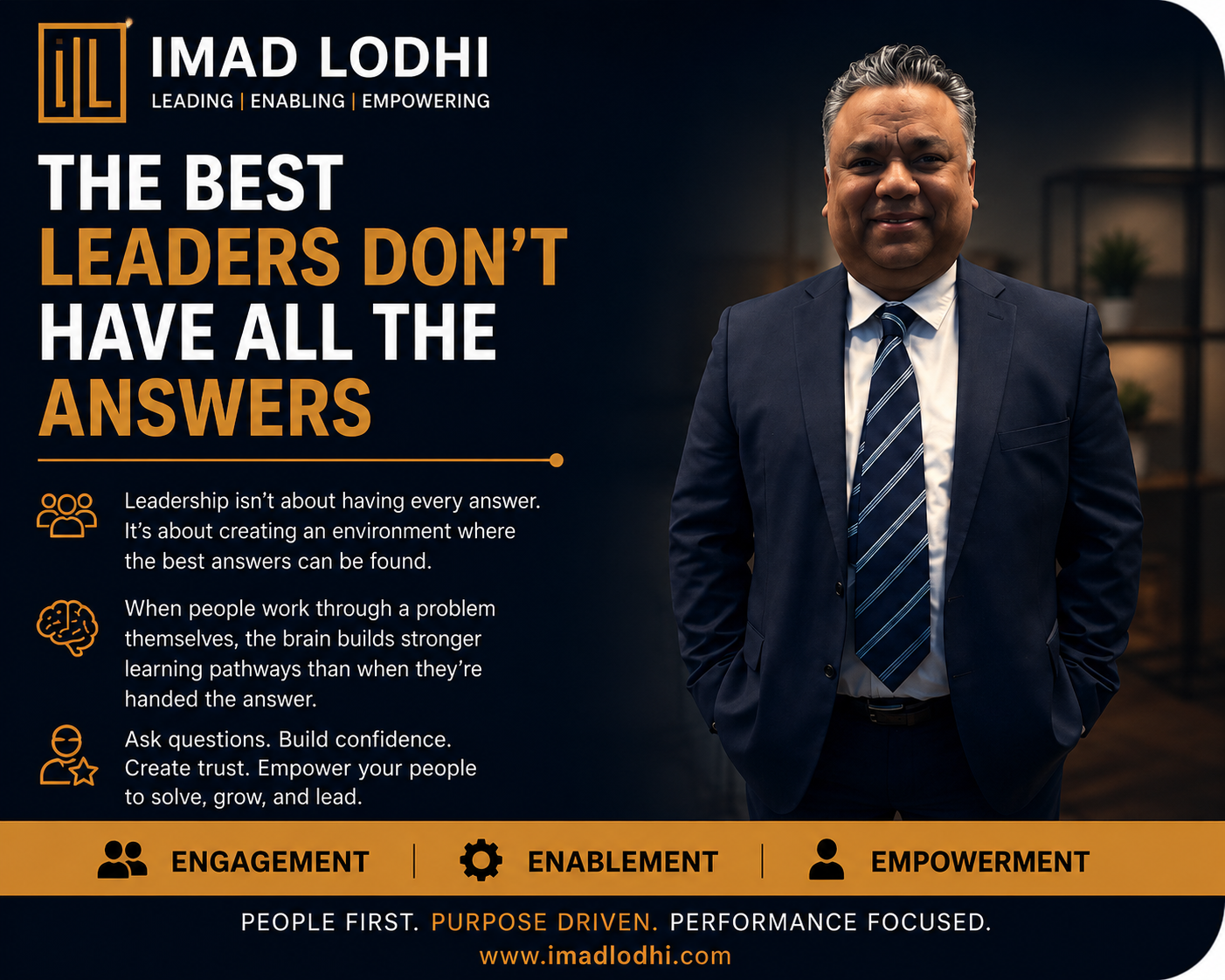
Leadership isn't about having every answer. It's about creating an environment where the best answers can be found.
Early in my career, I thought I had to solve every problem that landed on my desk.
If there was a technical issue, I wanted to fix it. If there was a client escalation, I wanted to own it. If two teams disagreed, I wanted to be the one with the solution.
Eventually I realized something.
The more answers I provided, the fewer problems other people learned to solve.
Without realizing it, I was becoming a bottleneck instead of a leader.
That changed how I approached leadership.
Instead of immediately giving answers, I started asking questions.
What do you think?
What options have you considered?
What information are we missing?
What would you recommend if you were leading this project?
Something interesting happened.
People began thinking differently. They became more confident. They started bringing solutions instead of just problems.
My job wasn't to be the smartest person in the room. My job was to help everyone else become smarter together.
From an employee engagement perspective, people become more invested when they feel their ideas matter.
From an enablement perspective, asking thoughtful questions helps people develop critical thinking instead of relying on someone else for every decision.
From an empowerment perspective, trust grows when leaders demonstrate confidence in their team's ability to solve problems.
The Human-Behavior Perspective
When people work through a problem themselves, they have an opportunity to build stronger learning, confidence, and problem-solving capability than when they're simply handed the answer.
The struggle isn't always the obstacle. Sometimes it's the teacher.
Faith and Humility
Faith has reinforced this lesson throughout my life.
Humility isn't a sign of weakness. It's the willingness to recognize that wisdom can come from anyone, regardless of their title or position.
Some of the best ideas I've ever implemented didn't come from the boardroom. They came from the people doing the work every day.
Practical Leadership Takeaway
The next time someone brings you a problem, resist the urge to answer immediately.
Pause.
Ask one thoughtful question before offering your opinion.
You may discover that the person already has the solution—they just need the confidence to trust it.
Looking back over your career, did you learn more from the leaders who gave you the answers, or from the leaders who taught you how to find them?
Key Takeaways
- Leadership is not synonymous with having all the answers.
- Constantly solving problems for employees can unintentionally create dependency.
- Thoughtful questions develop capability, confidence, and ownership.
- Engagement grows when people believe their ideas matter.
- Enablement develops when leaders help people learn how to solve problems.
- Empowerment grows when leaders trust people to act.