Customers judge the individual, the supplier and the delivery system separately. Personal credibility can preserve trust, but it cannot replace organizational capability.
Customers may trust an experienced leader while doubting the organization’s delivery capability. Durable confidence requires personal credibility to transfer into repeatable systems.
Employees learn what truly matters by watching which recurring problems leaders address, which behaviours they challenge and which frustrations they quietly allow to continue.
Contracts protect commercial intent, but durable managed-service relationships depend on clear ownership, decision rights, governance and retained capability.
Every function can meet its local target while the customer waits between teams. Dependable service requires ownership and measurement across the entire journey.
A workaround may keep work moving today, but when it becomes permanent, employees inherit hidden labour, avoidable risk and a system that depends on memory rather than design.
Busy seller activity is not proof of progress when the customer owns no meaningful action toward a decision.
Customers do not experience value as a list of completed tasks. They need an honest, evidence-based line from activity and output to outcome and business impact.
Employees often experience organizational dysfunction at the moment work crosses a boundary. A disciplined handoff transfers context, ownership and decision clarity—not merely a task.
Complex technology becomes commercially meaningful when buyers can connect capability to revenue, cost, risk, profit and human experience.
A procedure can standardize routine work and still fail when people are not taught which conditions require judgment, discretion or escalation.
An account can appear commercially healthy while avoidable rework quietly consumes the capacity, margin and management attention the report never counts.
Decisions become operational only when procedures, tools, reports and affected teams receive one executable version of the truth.
Aggregate improvement can conceal the customers, teams and complex work carrying worsening delay, recurrence and failure.
Managers cannot credibly own outcomes when decision rights, resources and timely escalation routes sit beyond their reach.
Priorities become operational only when leaders make the displaced work, capacity movement and accepted consequences visible.
Completed actions create false assurance when management verifies the deliverable but never checks whether the operating condition actually improved.
Risk acceptance becomes cost transfer when decision authority, operational exposure, mitigation and consequence ownership are allowed to separate.
Scheduled process reviews can confirm administrative currency while operational reality moves on. Strong process governance combines formal control with continuous sensing from exceptions, rework, technology changes and customer feedback.
Leadership presence is not a costume. The real test is whether you can adapt to the room, connect across levels, and still remain recognizably yourself.
One resignation may be an event. Repeated resignations under the same conditions can reveal a pattern that deserves evidence-based leadership investigation.
Good leadership does not require aggression. It requires readiness: knowing the facts, anticipating difficult questions, understanding the risks, and having options before pressure arrives.
Organizations say they hire on merit. But leaders can quietly optimize for comfort, familiarity and agreement—and in IT delivery, that can become an operational risk.
A promotion recognizes past performance. It does not automatically prepare someone for the different work of leading people, setting priorities, and creating results through others.
When every decision routes through one manager, employees stop building judgment, approval delays become operational risk, and service delivery slows to one person’s availability.
When employees learn that challenging a plan carries a social cost, leaders receive quieter meetings, weaker decisions, and operational risks that surface too late.
Leadership is not about pretending problems don't exist. It's about figuring out what you can do with what you've got.
There is nothing wrong with ambition, discipline or planning. But not every hour of our lives needs to be optimized, monetized or turned into evidence of how serious we are about business.
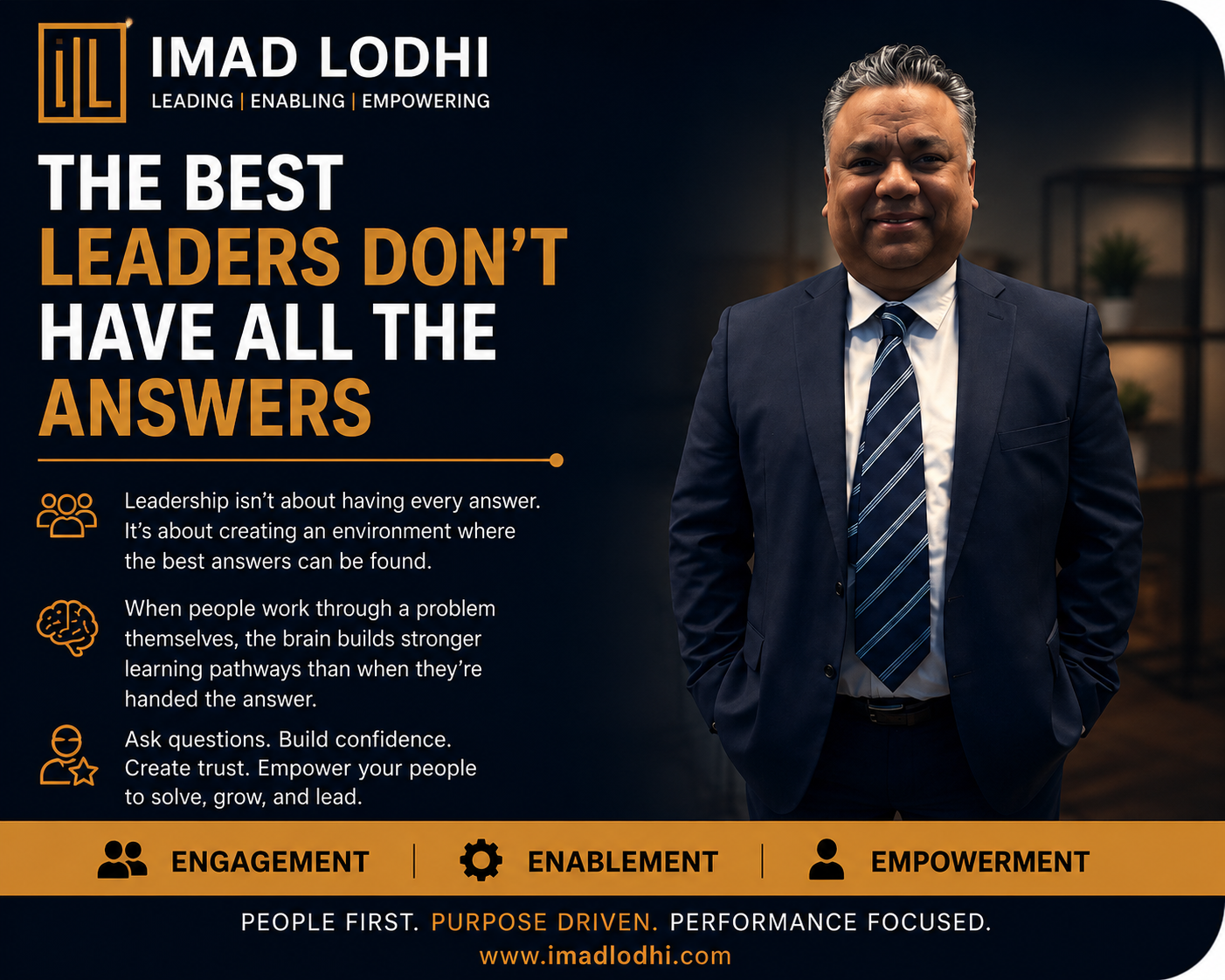
Leadership isn't about having every answer. It's about creating an environment where the best answers can be found—and developing people who can find them.
Dependable employees often inherit work because leaders trust them to rescue it. What looks like recognition can quietly become an unfair operating model that consumes capacity, development and goodwill.
Employees are often praised for instant responsiveness while the constant interruption quietly degrades judgment, concentration and ownership. Collaboration improves when teams distinguish genuine urgency from habitual access.
Employees cannot consistently meet expectations they have never been shown. When standards remain in a manager’s head, performance conversations feel arbitrary and improvement becomes guesswork.
Organizations often praise employees for rescuing work that broken processes repeatedly put at risk. The praise may be sincere, but sustainable engagement depends on removing the obstacles—not celebrating the recovery.
Managers will occasionally mishandle a tense moment. Employee trust is shaped by whether they acknowledge the impact, repair the relationship and change what happens next.
Employees quickly recognize when consultation is genuine and when a meeting is being used to validate a decision already made. Closing the loop on employee input is essential to trust, engagement and better execution.
Employees do not separate major leadership promises from the small commitments made in ordinary conversations. Repeated follow-through is one of the clearest signals that their concerns, time and contribution matter.
In today’s fast-paced, always-on business environment, time is everything. Whether it's a sudden system outage, a service disruption, or a security incident, the speed at which a company can respond often determines the difference between minor inconvenience and major catastrophe. As businesses become increasingly reliant on digital processes, Chief Information Officers (CIOs) are under immense pressure to ensure that services remain available and resilient in the face of unexpected challenges.
In every organization, a stable IT environment is the backbone of successful operations, enabling seamless service delivery, happy customers, and the implementation of cutting-edge innovations. However, achieving and maintaining stability is a complex challenge that goes far beyond simply keeping systems online. It involves navigating a network of interdependent teams, each of which can impact the overall performance of the IT ecosystem.
In today’s hyper-competitive market, customer satisfaction is more than just a nice-to-have; it’s the cornerstone of business success. Customers now hold the power, with high expectations for personalized, seamless, and responsive experiences across every touchpoint. For Chief Information Officers (CIOs), the stakes are high. The mandate goes beyond keeping the systems running—it’s about leveraging technology to elevate the customer experience (CX) and surpass customer expectations. In this blog, we’ll explore how CIOs are harnessing technology like data analytics and AI to transform customer satisfaction from a reactive afterthought into a strategic priority.
In many Indian households, the belt was once a feared tool for discipline. Fathers would use it to punish their children, often without explanation or discussion. This approach was meant to instill obedience, but it frequently led to resentment and fear.Similarly, in business relationships, contracts are often wielded like a belt, used to "beat" suppliers into submission. Customers may use contractual obligations to enforce their demands, without regard for the supplier's perspective or well-being.
In this topic, we will discuss the concept of "Team A" and "Team B" in the context of consulting firms and BPOs. Often during the sales and engagement cycle, these companies pitch the best and brightest resources (Team A) to potential clients, but end up staffing with less experienced and cheaper resources (Team B) due to cost pressures. This leads to a gap between what was promised and what is delivered, resulting in unsatisfied clients. In this discussion, we will explore how organizations can avoid this situation and ensure they deliver on their promises.
During challenging times, businesses may be focused on cost-cutting measures and may not be considering the full range of needs that they have, both explicit and implicit. This narrow focus on cost-cutting can lead to missed opportunities for growth and improvement, as well as a lack of support for the overall well-being and satisfaction of the clients.
The voice of the customer refers to the wants, needs, and expectations of a company's customers. It is the collective representation of their desires and perceptions, and it is used by businesses to guide their decisions and improve their products or services.
When it comes to customer service, there is a big difference between offering great services and being able to deliver those services. Many companies offer excellent customer service on paper, but when it comes time to actually deliver on those promises, they fall short. This can be due to a lack of resources, a lack of manpower, or simply a lack of knowledge on the part of the employees.
The best way to become a trusted advisor and differentiate yourself from your competition is to provide value-added services that go beyond what is expected.
Building credibility with a client is key to a successful business relationship. There are a few things you can do to make sure your client trusts you and believes in what you are saying.
It is empathy that allows us to feel compassion for others. It is empathy that allows us to see things from the perspective of another person, and to put ourselves in their shoes. When we are able to do this, we are better able to understand and relate to them on an emotional level.
Implementing organizational change that recognizes the significance of employee engagement, enablement, and empowerment mechanisms is crucial for achieving success. A system that seeks to comprehend how and why employees think and feel a particular way, as well as how these thoughts and feelings translate into actions or inactions.
Working at a fast-food restaurant is not something to be ashamed of. In point of fact, many people who work at fast-food restaurants have learned significant skills and capabilities that they may employ in their future professions. These skills and capacities include things like time management and customer service.
There's no shame in making changes in your life - we all do it. But be sure that you're doing it for the right reasons, and not because someone treated you badly.
"You're your own worst critic," goes the cliché. Most of us are harsh on ourselves, especially if we think we don't' measure up' in some manner - in our achievements, work or education, social standing, relationships, attractiveness, body image, financial position, etc.
Most of us want work that’s meaningful: We want to feel that our jobs make a difference to other people and that we are contributing to the greater good.
When you're confident, taking centre stage is considerably less of a challenge.Self-Confidence also allows us to make room by stepping aside so other people can have opportunities to shine as well.
Over the years, psychological studies have shown that people have an innate aversion to doing something different than what they’re doing today. This cognitive bias is known as Status Quo Bias, and it causes a level of subconscious inertia that they need to overcome.
It's easy to place blame on others when something goes wrong. After all, it's not our fault, right? Wrong. Taking responsibility for your actions is one of the most important things you can do in life - both professionally and personally.
It is possible to practise mindfulness even in times of extreme distress by becoming aware of the actual experience as an observer, using mindful breathing and focusing our attention on it, and mindfully listening to the distressing thoughts, recognizing them as mere thoughts, breathing with them, allowing them to happen without believing them or arguing with them.
A client exit should do more than close an account. It should convert scattered commercial and delivery signals into a better operating system for the next relationship.
Global Capability Centers can change ownership and economics. Sustained delivery improvement depends on the leadership behaviors and management systems behind the model.
Escalation matrices often define who to call while leaving teams to guess when impact, uncertainty, time or authority has crossed the point for intervention.
A fully staffed plan can still be operationally unready when critical skills, judgement, customer context and decision authority remain concentrated or missing.
Technical teams can report healthy components while customers remain unable to complete the service. The missing layer is end-to-end ownership, transaction-level visibility and coordinated diagnosis across organizational boundaries.
Operational reviews can become polished explanations of past failures without creating the decisions, ownership or control changes needed to prevent recurrence.
Problem records can close while the underlying failure pattern survives. Agentic Operations turns Problem Management into a continuous evidence loop that watches recurrence, validates corrective action and challenges closure when reality disagrees.
The queue is not the work. Agentic Operations can turn static ticket backlogs into continuously governed flow—predicting demand, reprioritizing risk, protecting SLAs and escalating the exceptions that actually need human judgment.
Automation creates value only when roles, workflows, measures and capacity decisions are redesigned around the work that remains.
Autonomous workers can execute defined tasks, but dependable outcomes still require a management layer that coordinates, verifies, learns and improves the system.
Technology implementations fail operationally when platforms digitize unresolved ownership, workflow and decision gaps, leaving teams to run the real work through spreadsheets, email and meetings.
When an official platform does not match the real work, teams build shadow systems—and the organization pays in duplicate effort, unreliable data, and customer risk.
Traditional automation executes predefined steps. Agentic operations changes the operating model by giving AI agents objectives, context and bounded authority to pursue outcomes. The opportunity is substantial—but broken processes, weak knowledge and unclear accountability do not disappear when agents arrive. They can simply execute dysfunction faster.
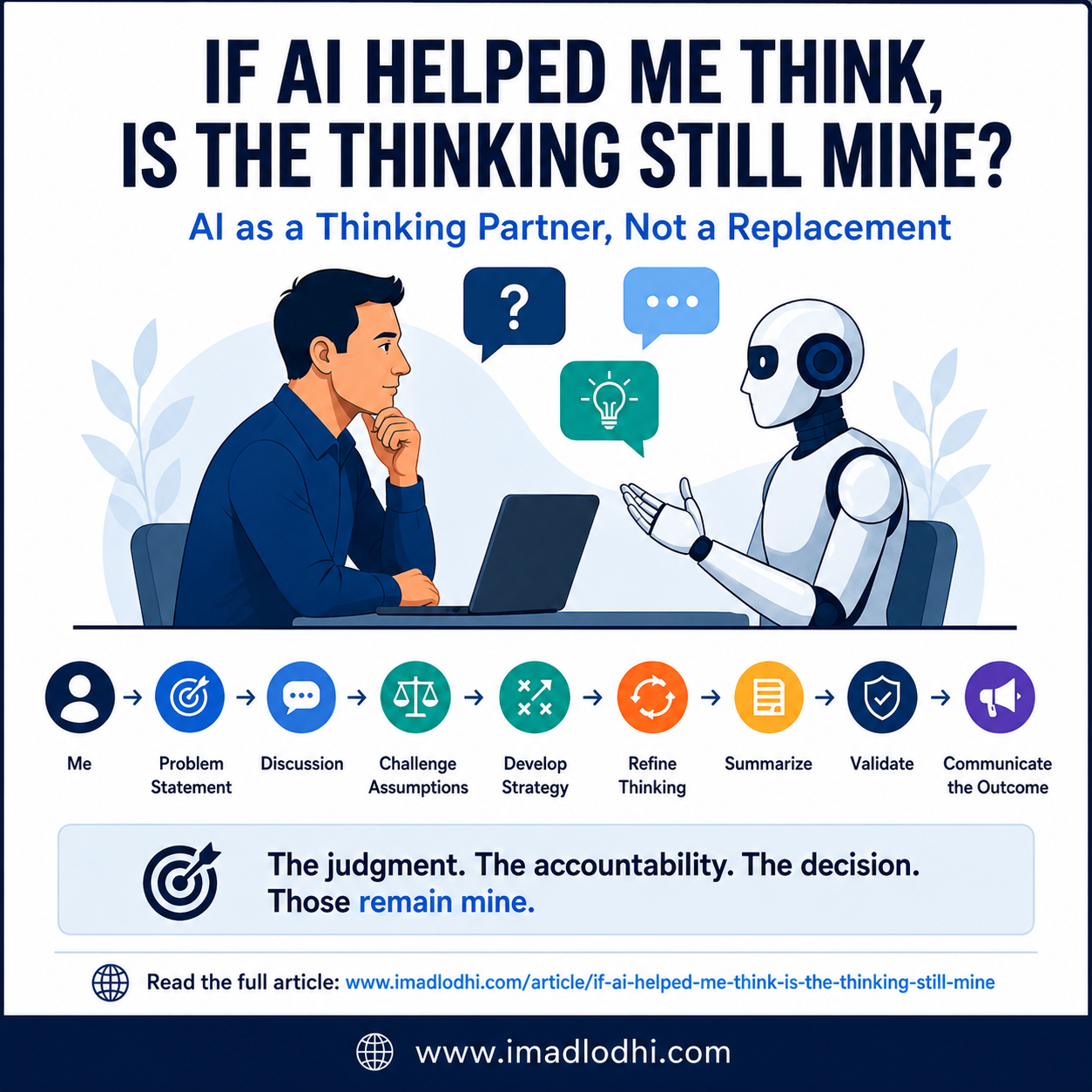
Generative AI does not have to replace human thinking. Used as a thinking partner, it can challenge assumptions, refine strategy and strengthen decisions while judgment and accountability remain human.
Too many organizations are buying generative AI first and searching for a business problem afterward—turning transformation into an expensive exercise in retrospective justification.
The real value of technology, data, analytics and AI is not the dashboard or the model. It is the better decision the organization can make because of the insight.
AI does not need more impressive titles. It needs experienced people who can connect business outcomes, technical capability, sales promises, delivery reality, and long-term operations.
A simple content request evolved one friction point at a time into an end-to-end agentic AI publishing workflow across Buffer, LinkedIn, and Webflow.
When organizations introduce new technology without protecting time for practice, employees are forced to learn in production—and customers absorb the risk.
Effort and results are two important factors that play a crucial role in determining success. Effort refers to the amount of work, energy, and time one puts in to achieve a goal or complete a task, while results refer to the outcome or output that is achieved as a result of that effort. While both effort and results are important, there has been a recent focus on the importance of effort, often at the expense of results. However, ultimately it is the results that matter.
When someone makes a mistake, it's crucial to communicate with them to address the issue. However, it's equally important to avoid gossiping or sharing the mistake with others. Instead, we should focus on sharing the lessons learned with others to prevent similar mistakes from happening in the future.
If you want to gain visibility in the workplace, there is one key currency that you must pay attention to: performance. Performance currency is the measure of your ability to achieve results and deliver value to your team or organization. Without it, you may be overlooked for promotions, bonuses, or even job security.
The term "one trick pony" is often used in a negative or derogatory way to describe a person or thing that is limited in their abilities or skills. This can be a liability in today's job market, where companies are increasingly prioritizing adaptability and versatility in their employees. The solution to this problem is to actively work on developing new skills and expanding your knowledge base, so that you can become a "carousel" of skills and abilities, increasing your value and marketability in the job market.
Embracing constructive feedback is crucial for personal and professional growth. It allows for new ideas and perspectives that can help improve work and achieve objectives. However, many individuals struggle with accepting criticism and feedback in a public setting, leading to fear of failure and rejection, limited ability to improve and adapt to new challenges, stagnation in career growth and lack of diversity in thought and decision making within teams. The solution is to develop strategies for managing emotions and reactions to feedback, seek out feedback from a diverse group of individuals, actively work to incorporate their perspectives into work, continuously seek out new challenges and opportunities for growth, and foster a culture of open communication and diversity of thought within teams.
Holding space for the younger generation is essential for managers and leaders. It requires a deep understanding of their unique needs and perspectives and involves actively listening, being open to new ideas, and creating a culture of empathy, respect, and understanding. By addressing challenges and providing resources, support and mentorship, managers can empower the next generation of leaders and create a space where they feel seen, heard, and valued.
As a management and leadership expert, I often see the impact that job titles can have on an individual's career and opportunities. In many cultures, including North America, job titles can hold significant weight and can be used to determine who is invited to certain events or meetings. But how do you ensure that you're being recognized for your expertise and experience, regardless of your job title?
Good communication is crucial to the success of any relationship, be it personal or professional. One important aspect of effective communication is the art of listening, which involves truly hearing others out before responding. In this blog, we will explore the importance of active listening and how it can improve our relationships and communication skills.
In any social or professional setting, it can be difficult to know when it is appropriate to speak up and share your thoughts, and when it is better to stay quiet and let others have the floor. In this article, we will explore the nuances of this delicate balance, and offer some practical tips for deciding when to speak up and when to stay quiet.
Divorce can be a taxing and complicated process, especially when children are involved. The division of financial assets often leads to contention, but one area that may be overlooked initially is the right to claim child tax credit. This credit, offered by the government to assist in child-rearing expenses, can be a significant financial asset.
The issue of child custody is often the most contentious part of a divorce. It is not just about legal rights but also about love, care, and the future of the children involved. The decision between sole, shared, and joint custody is fraught with emotion, legal nuances, and potential long-term impacts on both parents and children.
In the aftermath of a divorce, child custody agreements are often the cornerstone of ensuring that both parents maintain an active presence in their children's lives. However, the problem of a parent refusing to see their children on court-ordered custody dates is more common than one might expect. This issue can create emotional turmoil for the children and the other parent, leaving them feeling abandoned and confused.
Divorce is a complex and often painful process that extends far beyond the dissolution of marriage. The financial aspects can become particularly challenging, especially when children are involved. One of these challenges is the handling of extraordinary expenses, such as medical bills, sporting activities, and other non-routine costs that are vital for a child's growth and well-being.
The end of a marriage can often be fraught with contention, especially when it comes to financial matters. One of the most agonizing situations is when an ex-spouse refuses to honor their obligations towards child support or the upkeep of the family home. This refusal not only creates a legal dilemma but exacerbates the emotional strain on all parties involved.
Divorce is often accompanied by a multitude of complex and painful issues, not the least of which is the division of personal property. When emotions run high, something as simple as retrieving personal belongings from a shared residence can escalate into a contentious battle. This article delves into the situation where an ex-spouse refuses to allow access to personal belongings left in the house after divorce. From understanding the underlying causes to the legal implications and practical strategies, we will explore how to navigate this delicate issue with respect, fairness, and determination.
Separation and divorce are challenging experiences that often become more contentious when children are involved. The issue of access to children during the separation process can escalate into a highly emotional and complex legal battle. When an ex-spouse refuses to allow access to the children, it creates a situation that not only strains the relationship between the parents but also affects the children's well-being. This article seeks to explore the multifaceted issue of denied child access, delving into the underlying causes, immediate impacts, legal considerations, and offering strategies to protect rights, rebuild relationships, and ensure the children's best interests are upheld.
Divorce is painful, but perhaps nothing is more heartbreaking than being denied access to your children despite a court order granting you that right. This scenario, unfortunately, is a reality for many parents who find themselves trapped in a complex and emotionally charged battle with their ex-spouse.
Divorce proceedings are fraught with emotional turmoil and legal complexities. While most divorces follow a prescribed legal path, some encounters unique challenges that add further strain to an already stressful process. One such obstacle is when an ex-spouse refuses to accept legal papers regarding separation or divorce. This refusal can be a manifestation of denial, anger, or a deliberate attempt to delay the proceedings. This article delves into the underlying causes of this refusal, the legal and personal impacts it may have, and the strategies to confront and overcome this obstacle.
Divorce proceedings are fraught with emotional and financial complexities, but the challenges don't always end with the signing of the decree. The refusal of an ex-spouse to abide by court orders, particularly those related to financial obligations, can turn an already stressful situation into a legal nightmare. This breach of legal duty undermines the integrity of the legal system and can leave the affected spouse in financial jeopardy.
As contact centers embrace the future of Contact Center as a Service (CCaaS) platforms like Genesys Cloud, one of the biggest challenges they face is transitioning from legacy systems—particularly complex IVR (Interactive Voice Response) systems. These systems have been integral to contact centers for years, handling routine inquiries and routing calls to the appropriate agents. However, legacy IVR systems often lack the flexibility and scalability needed to meet modern customer expectations, and migrating them to the cloud without service disruption can be daunting.
In today’s highly competitive landscape, businesses are constantly seeking ways to provide exceptional customer experiences while maintaining operational efficiency. Traditionally, organizations have had to choose between the two, often sacrificing one for the other. However, with the emergence of AI-driven contact center platforms like Genesys Cloud, businesses no longer need to make that trade-off. By leveraging advanced AI capabilities and automation, it is now possible to create a balance where both customer satisfaction and operational performance thrive.
In today’s fast-evolving digital landscape, contact centers face increasing pressure to keep up with rising customer expectations. One of the most significant shifts organizations can make is moving from an on-premise contact center infrastructure to a Cloud-based Contact Center as a Service (CCaaS) platform like Genesys Cloud. While the benefits of such a migration are numerous—scalability, cost savings, and enhanced customer engagement—the process can present significant challenges, especially when dealing with large organizations that have multiple lines of business.
Genesys Cloud is one of the most advanced and comprehensive Contact Center as a Service (CCaaS) platforms available today. It offers a wide array of features designed to enhance customer interactions, optimize agent performance, and drive operational efficiency. From its omnichannel routing capabilities to AI-driven insights, Genesys Cloud enables organizations to deliver personalized, seamless customer experiences across multiple touchpoints
Migrating a contact center from on-premise to a cloud-based solution offers a range of benefits, including increased scalability, flexibility, cost efficiency, and enhanced customer experience. However, the process also presents numerous technical challenges that must be addressed to ensure a smooth transition.
I remember walking into a company's sleek new office, complete with all the latest gadgets and a state-of-the-art digital dashboard that monitored every conceivable metric. The CEO proudly showcased their digital overhaul, highlighting how they've integrated AI, cloud computing, and big data analytics into their operations. Yet, as I spoke to the employees, I sensed a disconnect. Morale was low, confusion was high, and the promised efficiency was nowhere to be found.
The Contact Centre as a Service (CCaaS) industry is revolutionizing how businesses handle customer interactions. As organizations seek more scalable, cost-efficient, and intelligent solutions, CCaaS providers have emerged as essential partners. Here, we explore five leading CCaaS providers, detailing their strengths, weaknesses, and top capabilities.
The backbone of a modern cloud contact center lies in its architecture. The right setup enables seamless integration between on-premise systems and cloud platforms, supporting omnichannel communication, AI-driven workflows, and robust data analytics.
The success of a modern contact center depends on a range of assets that ensure smooth operations and a seamless customer experience. From development frameworks to IVR systems and AI-driven conversational tools, these assets require regular assessment to maintain peak performance. Here's a breakdown of the most critical contact center assets, along with how they should be cataloged and evaluated to ensure effectiveness and identify opportunities for improvement.
The rise of artificial intelligence (AI) has brought a wave of transformative innovations to the Contact Center as a Service (CCaaS) industry. By enhancing operational efficiency, improving customer satisfaction, and enabling more personalized interactions, AI is reshaping how contact centers operate. Below are some of the key AI-driven innovations that are having the most profound impact on cloud-based contact centers today.
A customer may have strong demand for change while lacking the people, decisions, data and organizational capacity required to deliver it.
Executive sponsorship creates momentum, but complex decisions become durable only when the wider customer organization owns the change.
Price can be the safest objection to voice when the customer’s harder concerns involve value, risk, priority or internal confidence.
Pilots create commercial value when they resolve a defined uncertainty and lead to a customer decision—not when technical success simply creates more activity.
CRM accuracy depends on the quality of customer evidence behind each field. Clean data without validated meaning creates false confidence, not commercial control.
Deal reviews inspect opportunities. Coaching develops the seller’s judgment and behaviour so stronger performance transfers to the next opportunity.
LinkedIn is a powerful platform for personal growth and development, but it's not without its problems. One of the biggest issues is the prevalence of trite, surface-level advice that lacks real substance and value. While these posts may receive thousands of likes and impressions, they do little to truly support personal growth and development. As a management and leadership expert, I'm here to offer a solution. By understanding the importance of both cheerleaders and coaches in personal growth and development, and recognizing the value in providing detailed, actionable plans and strategies, you can rise above the surface-level advice and make a real impact as a leader.
Coaching is a process of guiding and supporting an individual or team to achieve specific goals and improve their skills and knowledge. Coaching typically involves providing feedback, setting goals, and offering guidance and support to help individuals or teams reach their full potential.
As a senior manager, it's important that you're able to coach people for growth. After all, helping others reach their potential is one of the key ways to create a thriving organization. But what exactly does coaching for growth entail? Here are some tips to get you started.
As a manager or leader, it is your responsibility to help your team members develop and grow in their roles. Coaching is a powerful tool that can help your team members improve their skills, increase their confidence, and achieve their goals.
In the last few months, I’ve had the opportunity to attend several startup events and meet a wide range of ambitious entrepreneurs. A common theme has emerged: many startups approach me seeking advice on securing funding. When I ask the fundamental question—What is the product or service you’re offering?—the response often involves the term AI.
In the ever-evolving realm of social media, the proliferation of management and leadership memes can indeed raise questions about their underlying objectives. Let's embark on a journey to decipher the layers and intentions behind these humorous snippets of wisdom.
In the world of business, startups and large service providers often find themselves competing for customers. While startups are known for their agility and customer-centric approach, large service providers have the advantage of resources and established networks. This article aims to explore the contrasting characteristics of startups and large service providers when it comes to customer satisfaction and outcomes.
In every organization, there's a dance of words that happens daily. The technical experts, with their jargon-filled language, face off against the business leaders, who often speak in broad, strategic terms. It's like they're reading from entirely different scripts, each thinking they're the lead in a solo performance, unaware that they're part of a duet.
Embarking on a startup journey is like setting sail on uncharted waters, filled with both promise and peril. While entrepreneurs are often brimming with passion and revolutionary ideas, they must tread cautiously to avoid common pitfalls that can derail their dreams. In this blog post, we shed light on the most common blind spots that startups encounter and offer practical insights to navigate them effectively. By addressing these challenges head-on, aspiring entrepreneurs can steer their ventures towards sustainable success.
In the dynamic world of startups, where innovation and creativity reign supreme, entrepreneurs often find themselves riding the rollercoaster of excitement, fear, and uncertainty. When nurturing a groundbreaking business idea, it is natural to focus on its strengths and potential success. However, a vital aspect of ensuring long-term viability is stress-testing the concept through the lens of a devil's advocate. In this blog post, we explore why embracing skepticism and taking a devil's advocate approach can be an effective strategy to assess the robustness of a business idea for startups.
In the world of startups and entrepreneurship, understanding and implementing the concept of a Minimum Viable Product (MVP) is vital. Whether you are a budding entrepreneur or a seasoned business veteran, the MVP approach can significantly streamline your process, saving time, effort, and money.
Entrepreneurship is an exciting journey, paved with opportunities, challenges, and a plethora of ideas. However, the key to a successful entrepreneurial endeavor lies in the careful selection of the right idea to pursue. As an entrepreneur, you may find yourself brimming with numerous innovative thoughts. But how do you sieve through this abundance and pinpoint the idea worth investing your time, energy, and resources? Here's a systematic approach to guide you through this crucial decision-making process.
As a successful entrepreneur and sales expert, I've come to understand the importance of strategy in selling, particularly when your venture is just starting to take off. Among the plethora of sales methodologies out there, one framework that has proven to be especially useful is the CDVM framework. It comprises four critical components: Customer, Decision Process, Value Proposition, and Message. Here, I'll guide you through each one, empowering you to take your startup's sales game to the next level.
For startups seeking to secure larger deals or key accounts, having a well-defined and strategic approach is paramount. This is where a "Win Plan" comes into play – a powerful document that outlines the steps and actions needed to succeed in specific sales opportunities. In this blog, we'll delve into the key components of a Win Plan and how startups can leverage it to their advantage in the competitive market.